
Introduction
In the complex ecosystem of airport safety, few parameters matter as much as runway surface friction. Every day, approximately 100,000 commercial flights depart and land worldwide—each one dependent on the friction coefficient between aircraft tires and runway surface for safe deceleration, directional control, and stopping distance. When runway friction degrades—whether from rubber deposits, water accumulation, snow, or surface wear—the consequences can be catastrophic.
The International Civil Aviation Organization (ICAO) estimates that runway excursions—events where an aircraft departs the runway surface during landing or takeoff—account for approximately 24% of all aviation accidents globally. According to ICAO's 2024 Safety Report, inadequate runway friction assessment was a contributing factor in over 40% of wet-runway excursions. This sobering statistic underscores why runway friction testing is not merely a regulatory checkbox but a fundamental pillar of aviation safety management.
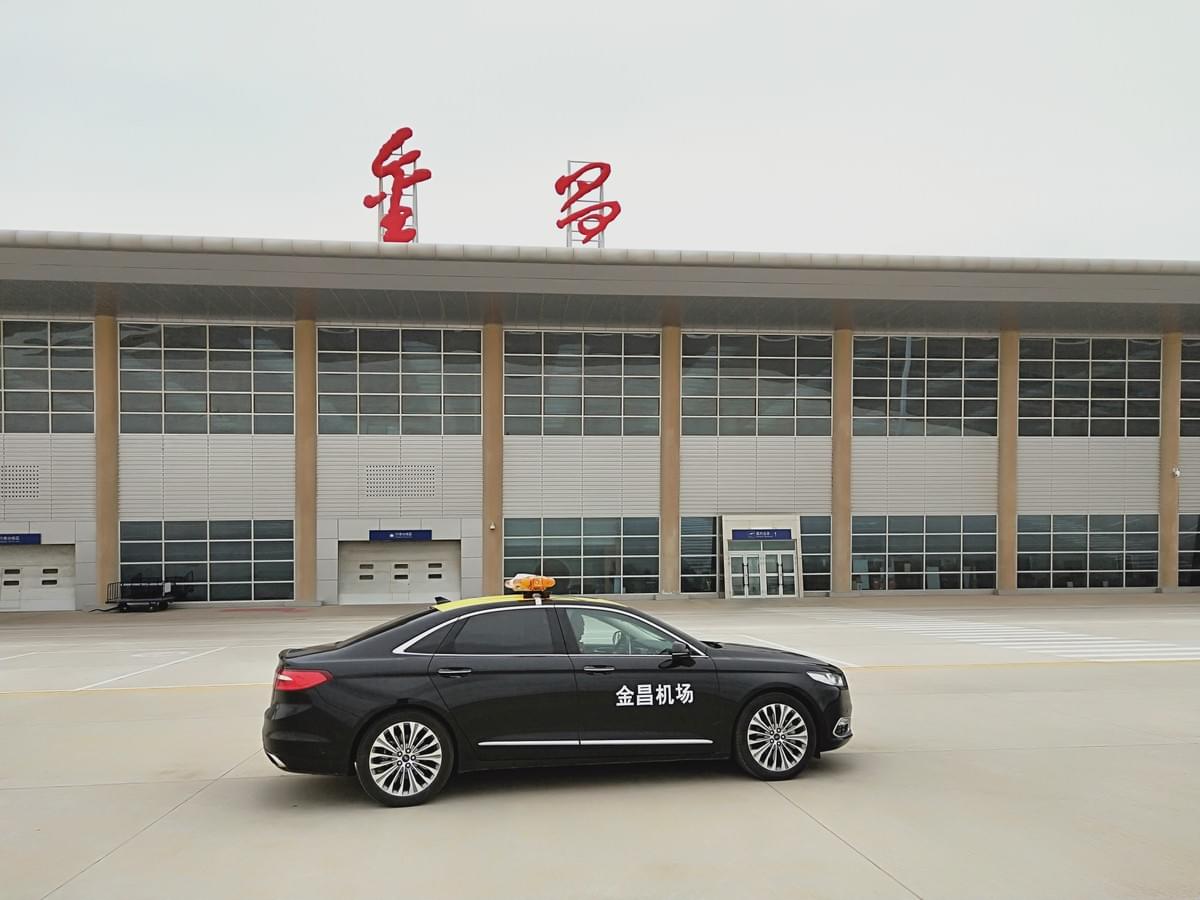
This comprehensive guide examines runway friction testing from multiple angles: the governing international standards, the technology behind modern friction measurement equipment, the critical difference between continuous and spot measurement approaches, calibration protocols, and the evolving regulatory landscape for 2026 and beyond. Whether you are an airport operations manager in Lagos evaluating procurement options, a civil aviation authority inspector in Bogota developing maintenance standards, or a safety officer in Dubai upgrading your runway assessment program, this guide provides actionable, technically grounded information.
We also examine the capabilities of modern friction testers like the Haisen Global BHM01 and BHM02—equipment currently deployed at over 200 airports across Africa, the Middle East, Central Asia, and Latin America—to illustrate how contemporary technology addresses long-standing measurement challenges.
1. Understanding Runway Friction: The Physics and the Stakes
Runway friction is quantified through the friction coefficient (mu), a dimensionless value representing the ratio between the horizontal braking force and the vertical load applied to a measurement tire. Under ideal dry conditions, a well-maintained runway surface typically registers a friction coefficient between 0.60 and 0.82. However, this value degrades under operational conditions:
Water contamination on a runway can reduce the friction coefficient by 40-60%. A surface that reads 0.70 when dry may drop to 0.35 when wet—moving from the "good" category to approaching the "poor" threshold. Rubber deposits from aircraft tires—accumulating primarily in touchdown zones—can reduce friction by an additional 15-25%. Snow and ice represent the most extreme degradation, potentially bringing friction levels below 0.15.
ICAO Doc 9137 (Airport Services Manual, Part 2: Pavement Surface Conditions) establishes the global framework for friction classification. The current ICAO friction classification system defines five levels: Good (mu >= 0.40), Medium to Good (mu 0.36-0.39), Medium to Poor (mu 0.30-0.35), Poor (mu 0.26-0.29), and Unreliable (mu < 0.25). When friction levels fall below 0.30, airports are required to issue NOTAMs (Notice to Air Missions) alerting pilots to degraded braking conditions.
The economic stakes are equally significant. A single runway excursion involving a wide-body aircraft can result in hull losses exceeding $150 million, not including airport closure costs, investigation expenses, and reputational damage. The EU Aviation Safety Agency (EASA) estimates that comprehensive friction testing programs deliver a return on investment ratio of approximately 15:1 through accident prevention alone, without accounting for operational efficiency gains.
2. Continuous vs. Spot Measurement: Why Methodology Matters
The friction testing community has long debated the merits of different measurement approaches. Understanding this distinction is crucial for airport operators making procurement decisions.
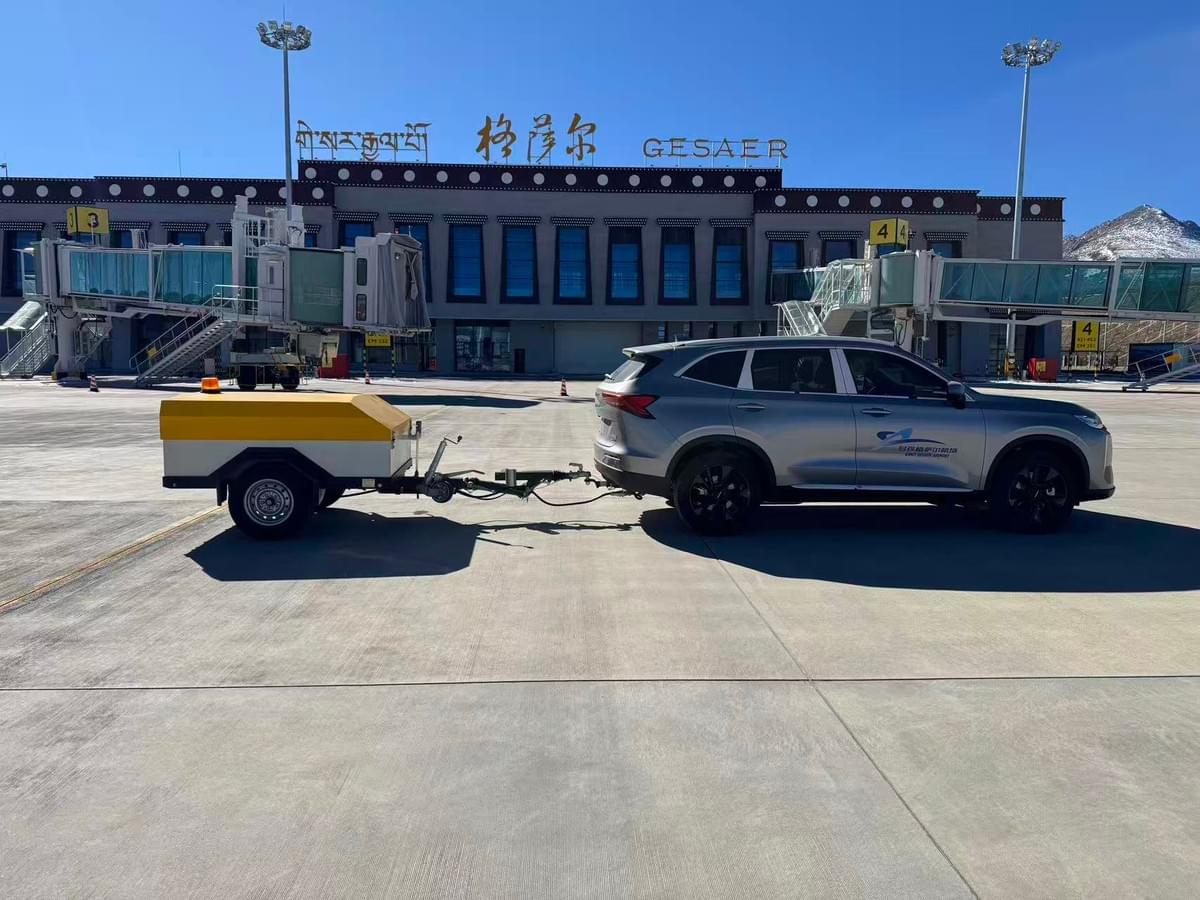
Continuous Friction Measuring Equipment (CFME) represents the modern standard. CFME devices—such as the Haisen BHM01 and BHM02 testers—measure friction continuously along the entire runway length while traveling at speeds between 40 and 96 km/h. A measurement wheel, typically operating at a slip ratio of 12-15%, transmits friction data to an onboard computer that generates real-time friction profiles. The BHM01 variant is designed for vehicle-towed operation; the BHM02 functions as a self-propelled, self-contained unit suitable for airports where a dedicated tow vehicle is not available.
The advantages of CFME are substantial. First, CFME provides full-length coverage rather than isolated data points, making it dramatically more effective at detecting localized friction degradation caused by rubber deposits or surface damage. Second, CFME testing can be conducted at operational speeds approaching actual aircraft touchdown velocities, yielding more representative readings. Third, the continuous data stream enables trend analysis—airport operators can overlay friction profiles from consecutive months to identify gradual degradation patterns long before they become safety-critical.
Spot measurement devices—often hand-pushed units using pendulum or British Pendulum Tester (BPT) methodology—provide point readings at specific runway locations. While significantly less expensive than CFME, spot testers suffer from inherent limitations. They measure friction at 5-10 discrete locations (versus continuous coverage), operate at walking speed (producing data at non-representative velocities), and introduce substantial operator variability. ICAO's updated guidance increasingly emphasizes CFME as the preferred methodology.
For airports in emerging markets across Africa, the Middle East, and Latin America—many of which operate in tropical climates with heavy seasonal rainfall—the continuous measurement approach is particularly critical. The combination of intense rubber accumulation from high-frequency operations and sudden friction degradation during tropical downpours demands the full-length monitoring that only CFME can provide.

Modern friction testers have evolved dramatically from early mechanical devices. The Haisen Global BHM series illustrates the technological maturity that contemporary equipment achieves.
The BHM01 Surface Friction Tester is a vehicle-towed CFME system designed for airports requiring maximum data fidelity. Its core measurement system uses a precision load cell with a measurement accuracy of +/-0.01 in friction coefficient units. An integrated water tank delivers a controlled water film of 0.5mm-1.0mm thickness ahead of the measurement wheel—critical because wet-surface friction is the regulatory standard, and dry-surface readings can provide misleadingly optimistic values. The onboard data acquisition system records friction coefficient at configurable intervals (typically every meter), GPS location data, speed, and water flow rate simultaneously.
What distinguishes the BHM01 in terms of operational reliability is its watering system integration. Many competing CFME designs require separate water tanker vehicles, complicating logistics. The BHM01's self-contained water delivery eliminates this dependency. For airports in regions with limited ground support vehicle fleets—common across much of the developing world—this self-contained design dramatically reduces total cost of ownership.
The BHM02 represents an evolution toward self-propelled operation. Where the BHM01 requires a dedicated tow vehicle, the BHM02 integrates propulsion, eliminating the tow vehicle entirely. This design is particularly advantageous for airports with constrained vehicle fleets or those seeking to minimize the personnel required for testing operations. The BHM02 also features automated calibration verification—a self-diagnostic routine that runs before each testing session, verifying load cell zero-point, water flow rate, and measurement wheel pressure against stored calibration values.
Both units comply with ICAO Doc 9137 specifications and are compatible with the Global Reporting Format (GRF) for runway condition reporting, which became mandatory worldwide in November 2021. The GRF requires airports to report runway conditions using standardized Runway Condition Codes (RWYCC) ranging from 6 (dry) to 0 (nil braking action). The BHM series exports data in GRF-compatible formats, enabling seamless integration with existing NOTAM and SNOWTAM reporting workflows.
4. Calibration: The Non-Negotiable Standard
Even the most sophisticated friction tester produces worthless data if calibration is neglected. ICAO mandates that friction measurement equipment undergo calibration verification at intervals not exceeding 12 months, with more frequent checks recommended for high-utilization airports.
The calibration process for CFME involves several interlinked verification steps. Load cell calibration ensures that the force measurement transducer accurately converts mechanical braking force into electrical signals. This typically involves applying known reference loads and verifying linearity across the full measurement range. Water flow rate calibration confirms that the water film thickness delivered to the measurement surface remains within the 0.5mm-1.0mm specification—too little water produces unrealistically high readings; too much can cause hydroplaning of the measurement tire itself. Measurement tire pressure verification is critical, as even small pressure deviations change the tire's contact patch geometry and consequently the friction reading. Tire wear monitoring follows a strict replacement schedule, as tread depth below minimum specifications alters measurement characteristics.
Reference surface verification—conducting measurements on a surface of known friction coefficient—provides the final system-level validation. Many calibration facilities maintain dedicated reference surfaces, typically sealed asphalt or concrete test strips with stabilized friction characteristics. The BHM02's automated calibration verification routine addresses one of the most persistent challenges in friction testing: the gap between scheduled calibrations. By performing self-checks before each testing session, the system can detect calibration drift that might otherwise go unnoticed for months.
For airports in regions with limited access to calibration facilities—a common scenario in parts of Africa and Central Asia—the availability of self-diagnostic capabilities substantially reduces operational risk. However, no automated system replaces the need for periodic professional calibration by manufacturer-certified technicians.
5. Regulatory Landscape and Future Trends
The regulatory framework governing runway friction testing continues to evolve, driven by accident investigation findings and technological advancement. Several developments merit attention from airport operators.
The Global Reporting Format (GRF), implemented worldwide in November 2021, represents the most significant change in runway condition reporting in decades. Under GRF, airports assess and report runway conditions using the Runway Condition Assessment Matrix (RCAM), which considers contaminant type, depth, and temperature to assign RWYCC values. While GRF emphasizes visual and observational assessment for contaminants like snow and slush, friction measurement remains essential for detecting subtle degradation that visual inspection cannot identify.
Regional regulators are increasingly strengthening friction testing requirements. The EU Aviation Safety Agency now requires CFME testing at intervals not exceeding 3 months for airports handling more than 50,000 movements annually. Several Middle Eastern civil aviation authorities have adopted similar standards, as have progressive regulators in Latin America. Airports in these jurisdictions that currently rely on spot measurement face mandatory upgrades.
Data integration represents the next frontier. Modern friction testers like the BHM01/BHM02 generate rich datasets—friction profiles, ambient conditions, GPS tracks, calibration logs—that, when integrated with airport pavement management systems (APMS), enable predictive maintenance. Rather than responding to friction degradation after it becomes safety-critical, airports can forecast when intervention will be required based on historical degradation rates and traffic volume projections. Several major Middle Eastern hub airports are pioneering this approach.
Climate adaptation adds urgency. Airports in tropical regions face more frequent and intense rainfall events due to climate change, increasing the frequency of wet-runway operations. Airports in northern latitudes face more freeze-thaw cycles that accelerate surface degradation. Both trends increase the demand for reliable, frequent friction assessment.
Conclusion: For airport operators evaluating friction testing equipment in 2026, the decision criteria have become clearer than ever. CFME capability, integrated water delivery, automated calibration verification, and GRF-compatible data output represent the baseline requirements for any modern friction testing program. The BHM01 and BHM02 exemplify this standard. In an industry where a single undetected friction deficiency can result in loss of life and hundreds of millions in liability, the investment in proper testing equipment is almost incalculably small relative to the risks it mitigates.
