
1. The Bird Strike Threat: A Billion-Dollar Problem
Bird strikes are one of aviation's most under-appreciated safety threats. Globally, approximately 36,000 bird strikes occur each year, causing economic losses of around $1.2 billion annually. In accident-cause analysis, bird strikes account for 43.26% of aircraft incidents — the single largest category, ahead of foreign body injury (33.02%) and lightning strike (6.51%).
The human and financial stakes are severe. Between 1992 and 2008, China's military aircraft alone suffered 20 serious flight accidents, 58 accident symptoms, and 210 flight problems due to bird strikes, resulting in 18 aircraft crashes and the deaths of 12 pilots. In July 2022, an American A321 passenger jet caught fire after being struck by a flock of birds. In August and September 2023, two separate Chinese domestic flights experienced bird strikes in quick succession.
The daily pattern of bird strikes reflects aviation activity itself: 43% occur at night, 38% during the day, 14% at dusk, and 5% at dawn. An integrated bird detection and repellent system addresses this threat by combining automated detection with automated dispersal — detecting birds before they enter the flight path and repelling them before they pose a hazard.
2. The Limitations of Traditional Bird Control
For decades, airport bird control has relied on a patchwork of reactive, manual methods: human patrols with binoculars, shotgun blanks, propane cannons, distress calls, and visual deterrents such as scarecrows and reflective tape. While each has some value, they share a common set of fundamental weaknesses.
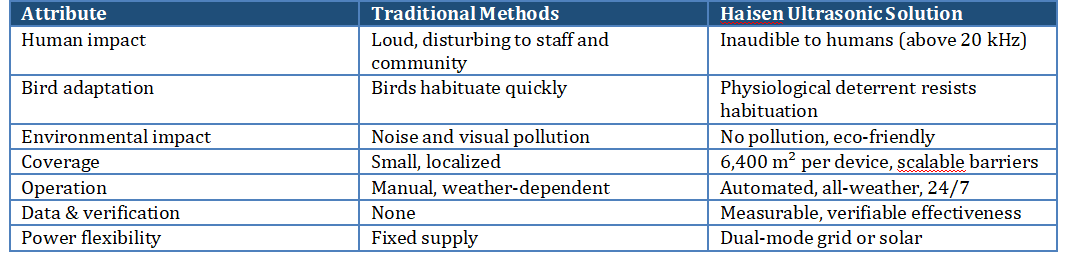
· Adaptation: Birds adapt quickly to repeated, single-pattern deterrents, causing effectiveness to decay over time.
· Coverage gaps: Manual patrols cannot monitor a full runway 24/7, leaving critical gaps during dawn, dusk, and night.
· Identification limits: Human observers have limited range and struggle to identify small, fast-moving species.
· Noise pollution: Blank guns and propane cannons are loud, disruptive, and increasingly restricted near communities.
· No data: Traditional methods generate no measurable data on effectiveness, making it impossible to optimize strategy.
The result is a reactive, intuition-driven approach that cannot scale to the demands of modern high-traffic airports. The industry's answer is the integrated detection and repellent system: a digital, data-driven platform that automates the entire “detect → disperse → verify” workflow.
The consequences of these limitations are measurable. Without real-time monitoring, airports cannot know whether a bird flock is massing at the runway threshold until a patrol happens to pass by. Without data on dispersal effectiveness, they cannot tell whether a deterrent is working or whether birds have simply moved to a different, equally hazardous location. And without automation, the effectiveness of the entire bird control program depends on the vigilance and availability of individual staff members — a fragile foundation for a safety-critical function. The integrated system directly addresses each of these gaps.
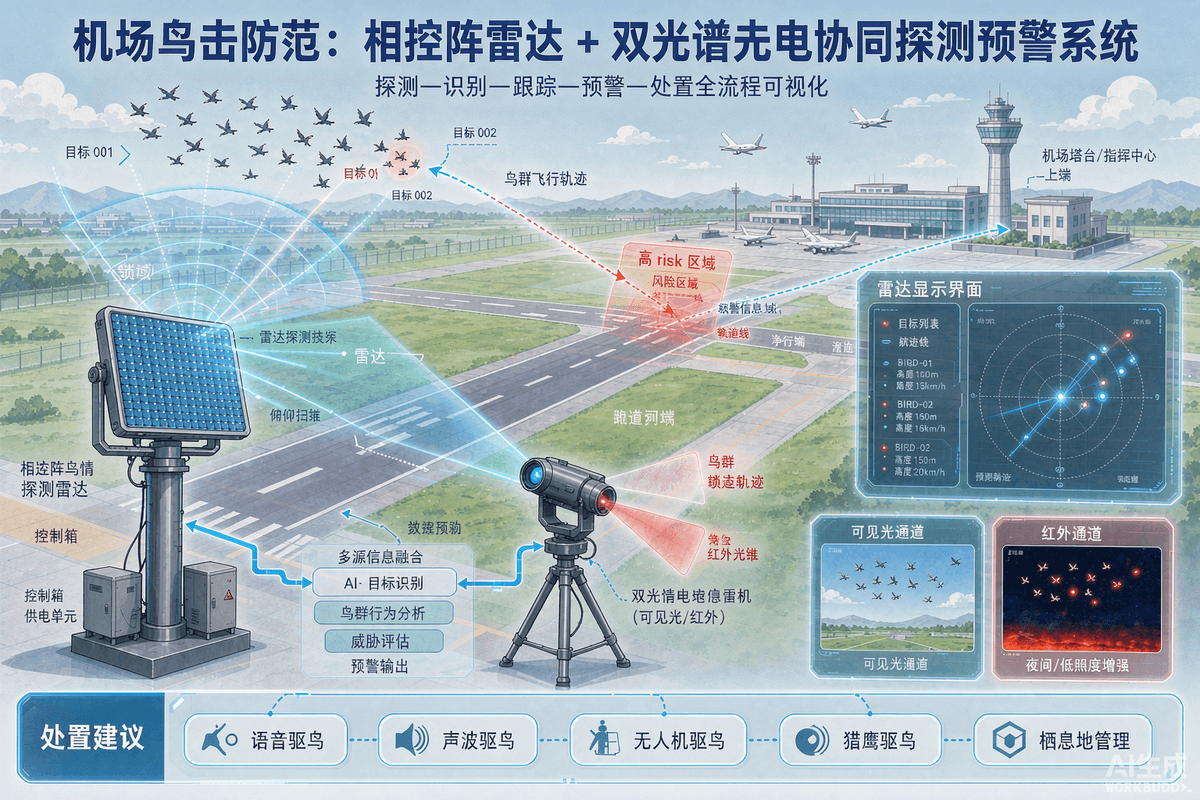
Figure 3: A phased-array bird detection radar with dual-spectrum electro-optical verification tracks bird flocks in real time.
3. What Is an Integrated Bird Detection and Repellent System?
An integrated bird detection and repellent system is a comprehensive, multi-technology solution that combines automated bird detection with automated bird dispersal under a single command-and-control platform. It realizes the “detection and deterrence” bird defense concept: the automatic bird detection system identifies and tracks birds in real time, and the dispersal system responds automatically to repel them from the aircraft takeoff and landing path.
The system architecture spans four layers. The detection layer deploys phased-array bird radar and dual-spectrum electro-optical (EO) sensors to detect and track birds across the airspace. The computing and storage layer applies AI neural-network computing for target classification and trajectory prediction. The business layer provides command, dispatch, and presentation for operators. And the device-disposal layer triggers dispersal equipment — ultrasonic emitters, directional sound, or propane cannons — based on the bird's mode, activity, and characteristics.
4. System Implementation Goals
The integrated
system pursues three implementation goals that together transform how an airport manages bird hazard. The first goal is to build a digital bird hazard control platform. By adopting a digital management platform, the airport establishes comprehensive information management systems for monitoring bird control status, ecological governance, operational management, and data analysis. This resolves the limitations of traditional single-device procurement — weak system integration, inconsistent operational integration, and fragmented functionality.
The second goal is to introduce automatic bird detection technology. To address the low inspection efficiency, poor identification accuracy, and operational constraints of the original manual inspection mode, the airport achieves 24/7, all-weather, large-scale, high-precision bird detection through radar and photoelectric equipment. This shifts bird situation inspection from “manual on-site response” to “centralized, comprehensive domain management.”
The third goal is to realize an integrated detection and dispersal workflow. Through the real-time connection between the automatic detection system and the dispersal system, the airport protects the takeoff and landing path of aircraft, realizing a true “detection and deterrence” defense system. Real-time data enables dynamic evaluation of dispersal equipment efficiency and precise control of patrol personnel. Guided by the principle of “one-time planning, phased implementation,” the platform systematically integrates various bird deterrent methods, shifting bird strike prevention from intuition-based to data-driven strategies.
5. Detection Technology: Phased-Array Radar and Dual-Spectrum Optics
Effective bird control begins with effective detection. Haisen Global's Hawkeye series of phased-array bird radar provides all-weather, 24/7, long-range, airspace-wide detection and tracking of birds and other low-slow-small (LSS) targets, using AI for target classification and supporting unmanned operation in complex urban, mountainous, and marine environments.
The Hawkeye series offers three configurations: Hawkeye Alpha (1D active), Hawkeye Beta (2D active), and Hawkeye Gamma (DBF bird radar), each optimized for different range and precision requirements. The radar architecture is software-defined, enabling requirements to be defined, hardware to be reconfigured, and software to be refactored for rapid custom development — near, mid, and far range are all customizable for complex scenarios.
This architecture deeply integrates AI and radar technology. AI applications include full-scene adaptive multi-target tracking, target classification, CPU-GPU-based radar signal processing, statistical prediction, and expert-system health management. The result is a smart bird detection radar that can be deployed on COTS products — from portable laptops and edge computing boxes to full servers — and scaled into networked joint solutions.
Detection is enhanced by dual-spectrum EO verification: visible-light and infrared (including IR cooled scanning) cameras confirm radar detections and provide HD imaging of bird flocks. This multi-spectral fusion delivers both early-warning detection and precise identification, feeding a real-time trajectory map that operators view on an integrated management display. For low-altitude bird monitoring below 50 meters, visual AI provides additional identification, tracking, and warning capability.
6. Multi-Technology, Full-Coverage Protection
No single technology can cover every phase of flight, which is why the integrated system layers multiple technologies across the entire aircraft movement cycle. During the approach and landing phases, phased-array bird radar provides long-range detection, supported by dual-spectrum EO verification. During taxiing and takeoff, short, mid, and long-range omni-sound and directional-sound dispersal systems activate to clear the path. IR cooled scanning EO provides additional coverage in low-light conditions.
This multi-technology integration ensures full coverage of both the takeoff-and-landing bird hazard zone and the arrival/departure bird hazard zone. The dispersal layer deploys short, mid, and long-range sound solutions strategically, so that whether a bird flock approaches from high altitude during approach or crosses the runway during taxi, the system detects and deters it at the appropriate range and with the appropriate method.
7. Repellent Technology: Ultrasonic Dispersal and Beyond
Detection is only half the solution. As Haisen Global's guiding principle states: without effective bird repelling, an integrated detection and repellent system remains a concept. The dispersal layer employs multiple technologies, with ultrasonic dispersal as the flagship innovation.
The biological principle is elegant. Birds' hearing range (20 Hz to 50 kHz, with some species exceeding 90 kHz) far exceeds human hearing (approximately 20 kHz). Ultrasonic waves above 20 kHz are therefore perceived by birds but completely inaudible to humans. High-frequency vibration stimulates birds' inner-ear hair cells, causing dizziness and restlessness that disrupts their normal activities and forces them to abandon the area — a precise, humane deterrent that does not interfere with airport staff or nearby communities.
Each ultrasonic device generates 15-degree beams on four sides, creating a 6,400-square-meter ultrasonic sound field at a 150-meter distance. When devices are deployed in clusters, their overlapping sound fields form a continuous barrier. For supplementary repelling, a propane cannon delivers a 200-meter effective range and can be networked across an open area to eliminate blind spots, with waterproof, dustproof, corrosion-resistant, and EMI-resistant design that avoids signal conflicts with airport radar.
The dispersal equipment supports dual-mode power supply (grid or solar) to meet power conditions in different airport areas, and is equipped with universal brackets and fixed bases for flexible installation on the ground or on light poles without affecting aircraft takeoff and landing. This flexibility is essential for airports where power availability and terrain vary significantly across the airfield.
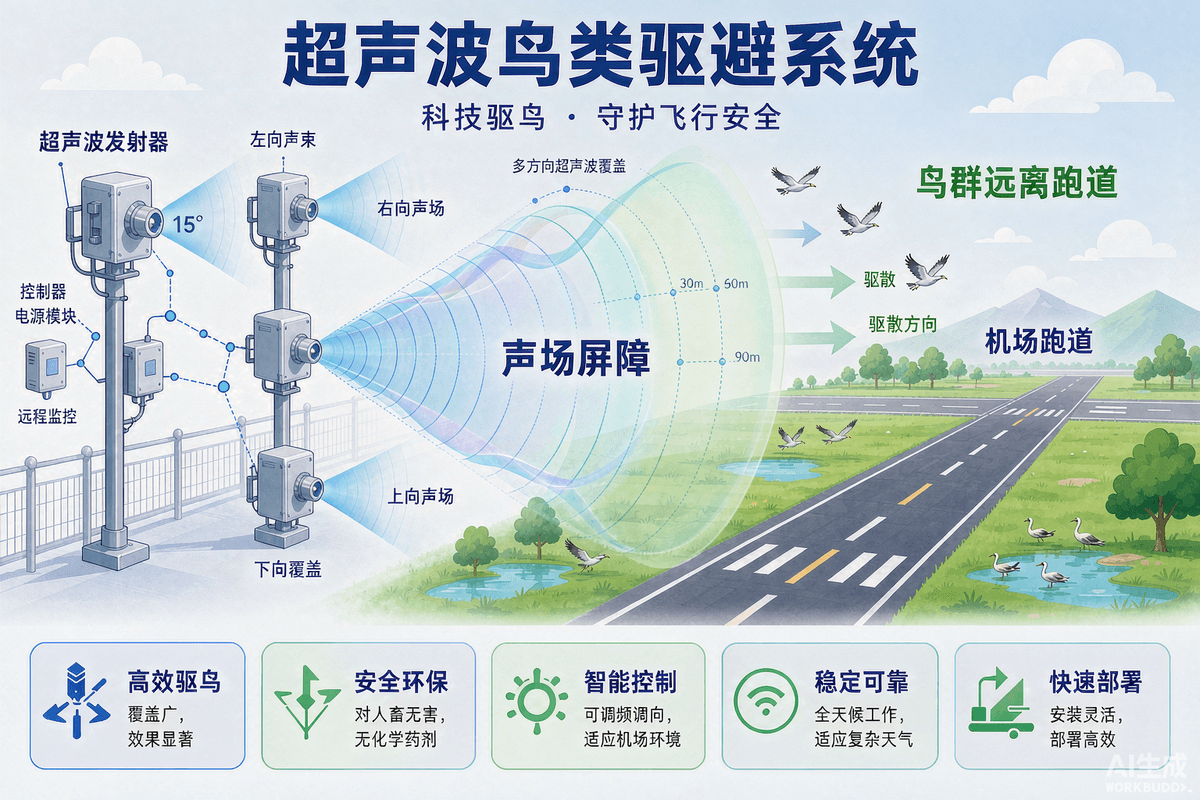
Table 1: Ultrasonic vs. traditional bird repellent methods
9. The Digital Bird Defense Platform
The integrated system is managed through a multi-terminal, multi-scenario bird defense platform that unifies the entire operation. Smart control runs on PC workstations in the command center, providing operators with AI data-fusion analysis, digital-twin integrated situation command, and full digital recording of risk events. Field operations run on PAD (tablet) devices, and ecological research teams use PAD terminals for habitat surveys and ecological governance planning.
The platform's business layer includes device management, a task board, trend presentation, knowledge learning, information acquisition, job management, work assistant functions, on-site response tools, and aggregate analysis. This comprehensive suite means that every stakeholder — from the command-center operator to the field patrol officer to the ecological researcher — works from the same real-time data, eliminating the information silos that undermine traditional bird control programs.
10. Proven Results: Real Airport Case Studies
The most persuasive evidence for any aviation safety technology is operational results at real airports under real conditions. Haisen Global's integrated system has been deployed and validated at several major Chinese airports.
10.1 Lanzhou Zhongchuan International Airport
Lanzhou deployed 20 sets (80 units) of ultrasonic bird dispersal equipment to protect the north-end takeoff and landing airspace of its 4,000-meter east runway, where bird flocks from an adjacent forest habitat were crossing a farmland foraging area through the flight path. Devices were strategically placed at the habitat's east slope, the bird-strike hotspot, and the foraging area to form a sound barrier up to 400 meters thick. The results were dramatic: after activation, birds approaching the operating devices all turned back. Within days, no bird strike incidents occurred at the original hotspot, and the airport recorded an 80% reduction in sparrows, swallows, and other flocking birds at the runway's north end. A controlled shutdown experiment confirmed the causal effect — when devices were switched off, bird activity returned to its previous severe state and strikes recurred.
10.2 Chongqing Jiangbei International Airport
Chongqing deployed 27.5 sets (110 units) to protect the south-end landing airspace of its 3,200-meter Runway 1, covering a defense area of 700 meters in length and 127,000 square meters. Bird flocks repeatedly attempted to cross into the defense area but turned back each time after approaching the operating devices. After activation, no flocks circled or crossed, and occasional individual birds entering the area quickly departed. The airport's flight department confirmed the results met performance expectations.
10.3 Nanjing Lukou Airport and Shanghai Pudong
At Nanjing Lukou Airport, a 900-meter test section was deployed across seven directions in an active bird environment, with bird activity significantly suppressed and no flock circling or crossing observed. At Shanghai Pudong and Guangzhou Baiyun airports, controlled experiments showed flocks dispersing within 2–5 minutes of device activation, with hundreds of sparrows leaving in rapid succession — not the pattern of normal migration, but a direct response to the deterrent.
11. The Business Case and ROI
The economics of bird strike prevention mirror those of FOD detection: prevention is dramatically cheaper than response. A single bird strike can cause engine damage costing $1 million or more, a precautionary landing, flight cancellations, and passenger compensation. The integrated system's ROI is realized through: avoided engine and airframe damage, reduced flight disruption and delays, lower manual patrol costs through automation, and measurable compliance with wildlife-management requirements.
Beyond direct savings, the system transforms bird control from intuition-based to data-driven. Real-time detection data enables dynamic evaluation of dispersal effectiveness and precise control of patrol personnel. A digital-twin integrated situation command provides full digital recording of risk events, supporting both regulatory audit and continuous improvement.
For airport leadership, the integrated system also represents a strategic upgrade from fragmented equipment procurement to a unified digital capability. Rather than purchasing separate radar, cameras, and deterrent devices from multiple vendors and attempting to integrate them in-house, the airport receives a single, coherent platform where every component is designed to work together. This reduces integration risk, simplifies maintenance and training, and provides a single vendor accountable for end-to-end performance — a compelling value proposition for procurement teams managing complex, safety-critical programs.
12. Regulatory and Environmental Context
Aviation authorities worldwide require airports to implement wildlife hazard management programs. ICAO guidance and national regulators (FAA, CAAC, EASA) expect airports to demonstrate a systematic, documented approach to bird strike risk reduction. The ultrasonic dispersal approach offers a particular advantage in this regulatory context: it is humane, non-lethal, environmentally clean, and fully auditable through the system's digital recording of every detection and dispersal event. This positions Haisen Global's solution as both a safety investment and an ecological best practice.
13. Site Survey and Deployment Planning
An integrated bird detection and repellent deployment begins not with hardware, but with a rigorous site survey. The planning process maps the airport's bird-strike hotspots, identifies habitat and foraging areas in the surrounding landscape, and analyzes bird movement corridors to determine where detection and dispersal resources will deliver the greatest safety impact.
The site survey typically reveals a recurring pattern. Birds inhabit nearby forest, wetland, or grassland habitats, then cross the flight path to reach foraging areas — farmland, open grassland, or water sources. The crossing corridor, where the flight path intersects the birds' daily movement, is the bird-strike hotspot. Effective deployment places detection radar to cover this corridor and positions dispersal devices to form a sound barrier that blocks the crossing route before birds reach the critical takeoff and landing airspace.
The deployment plan then specifies the number and position of devices. At Lanzhou, for example, the plan distributed 20 sets of devices across three zones: the habitat edge (to deter birds at the source), the hotspot itself (to block the crossing), and the foraging area (to prevent approach from the far side). This layered, barrier-oriented approach — informed by ecological understanding of bird behavior — is what distinguishes a systematic deployment from a simple scattering of deterrent devices.
14. Continuous Improvement: The Bird Situation Prevention Cycle
An integrated system is not a set-and-forget installation. It is a continuous improvement engine built around a five-step cycle: insight into site surveys and requirements, system deployment and implementation, effect checking against evaluation indices, optimization of weak links, and presentation of outcome data to demonstrate value. Each deployment generates data that refines the next.
The effect-checking step is critical and uniquely enabled by the digital platform. Rather than relying on anecdotal observation, operators can quantitatively evaluate whether bird activity has decreased, whether birds have relocated to a new hazard area, and whether specific devices are underperforming. This feedback loop was demonstrated at Chongqing, where operators observed that while bird numbers within the defense area did not decrease overall, the devices successfully pushed bird activity from the protected north end to the south end of the runway — a finding that informed subsequent optimization of device placement.
15. Frequently Asked Questions
Q: How does ultrasonic bird repellent work without harming birds or humans?
A: Ultrasonic dispersal exploits the difference between avian and human hearing. Birds perceive frequencies from 20 Hz up to 50 kHz (some species above 90 kHz), while humans hear only up to about 20 kHz. The device emits sound above 20 kHz — audible and uncomfortable to birds but silent to humans. High-frequency vibration stimulates birds' inner-ear hair cells, causing temporary dizziness and restlessness that drives them to abandon the area. It is non-lethal, humane, and does not disturb airport staff or nearby residents.
Q: How large an area can one ultrasonic device protect?
A: A single device generates 15-degree ultrasonic beams on four sides, producing a 6,400-square-meter sound field at 150 meters. For larger areas, devices are clustered so their overlapping fields form a continuous sound barrier up to 400 meters thick, denying birds entry to the protected airspace.
Q: Do birds eventually adapt to ultrasonic repelling?
A: Unlike visual or audio scare tactics to which birds habituate quickly, ultrasonic dispersal operates on a physiological mechanism — stimulation of the inner ear — that resists adaptation. The Lanzhou case study demonstrated sustained effectiveness: after deployment, the 80% reduction in bird activity persisted, and a controlled shutdown confirmed birds returned only when devices were turned off.
Q: How does the radar detect and classify birds?
A: The phased-array radar detects and tracks birds and other low-slow-small targets across the airspace in all weather, 24/7. AI neural-network computing classifies targets by species and behavior, while dual-spectrum electro-optical (visible + infrared) cameras provide visual confirmation. The fusion of radar and optics delivers both early-warning detection and precise identification.
Q: Can the system run on solar power?
A: Yes. Dispersal devices support dual-mode power supply — grid or solar — meeting the power conditions of different airport areas. This flexibility allows deployment in remote runway sections where grid power may be unavailable or costly to extend.
Q: How long does it take for the system to disperse birds after detection?
A: In operational tests, bird flocks dispersed within 2–5 minutes of device activation. At Guangzhou Baiyun, hundreds of sparrows left in rapid succession shortly after activation. The system's detection-to-dispersal workflow is automated and near-real-time, ensuring birds are repelled before they enter the critical takeoff and landing path.
Q: What bird species can the integrated system handle?
A: The system is effective against a broad range of species, including flocking birds such as sparrows, swallows, and hoopoes, as well as wading birds like pond herons and common terns, and larger species such as grey-headed lapwings and some raptors. The Hawkeye radar's AI classification identifies species by flight characteristics, and the ultrasonic dispersal operates on the shared avian hearing mechanism, making it effective across species with differing sizes and behaviors.
Q: Is ultrasonic bird dispersal safe for the environment?
A: Yes. The technology is non-lethal, produces no chemical or physical waste, and emits frequencies inaudible to humans and most ground wildlife outside the avian hearing range. Because it targets a shared avian physiological mechanism rather than individual birds, it is considered a humane and ecologically responsible alternative to lethal control or habitat-destructive methods, and it aligns with the environmental safeguards increasingly required by aviation regulators.
16. Conclusion
Bird strikes cause over $1.2 billion in damage annually and represent the single largest category of aircraft incidents. Traditional reactive bird control methods can no longer meet the demands of modern airports. The integrated bird detection and repellent system represents a fundamental shift — from intuition to data, from manual response to automated deterrence, from single-device procurement to a unified digital bird-hazard control platform.
With phased-array radar detection, dual-spectrum optical verification, AI classification, and humane ultrasonic dispersal, Haisen Global's solution has delivered measurable results at Lanzhou, Chongqing, Nanjing, Pudong, and Baiyun airports — including an 80% reduction in bird activity and multi-day runs with zero bird strikes at previously severe hotspots. For airport operators committed to both flight safety and ecological responsibility, the integrated system is not an option; it is the standard to which modern bird strike prevention is held.
To evaluate an integrated bird detection and repellent deployment for your airport, contact Haisen Global for a site survey and tailored implementation plan.