An airport passenger boarding bridge (PBB) is an enclosed, elevated, movable walkway that connects an airport terminal gate to an aircraft, allowing passengers to board and disembark safely while being protected from weather conditions and ground hazards. Manufactured by companies like Haisen Global, modern passenger boarding bridges are engineered to accommodate diverse aircraft types, withstand extreme climates, and meet stringent international aviation safety standards including ICAO Annex 14 requirements.
For airport operators in emerging markets across Africa, the Middle East, Central Asia, and Latin America, selecting the right boarding bridge is a critical infrastructure decision that affects passenger experience, operational efficiency, and long-term maintenance costs. This guide provides a comprehensive overview of boarding bridge types, key selection criteria, safety compliance, and maintenance best practices.
What Is an Airport Passenger Boarding Bridge?
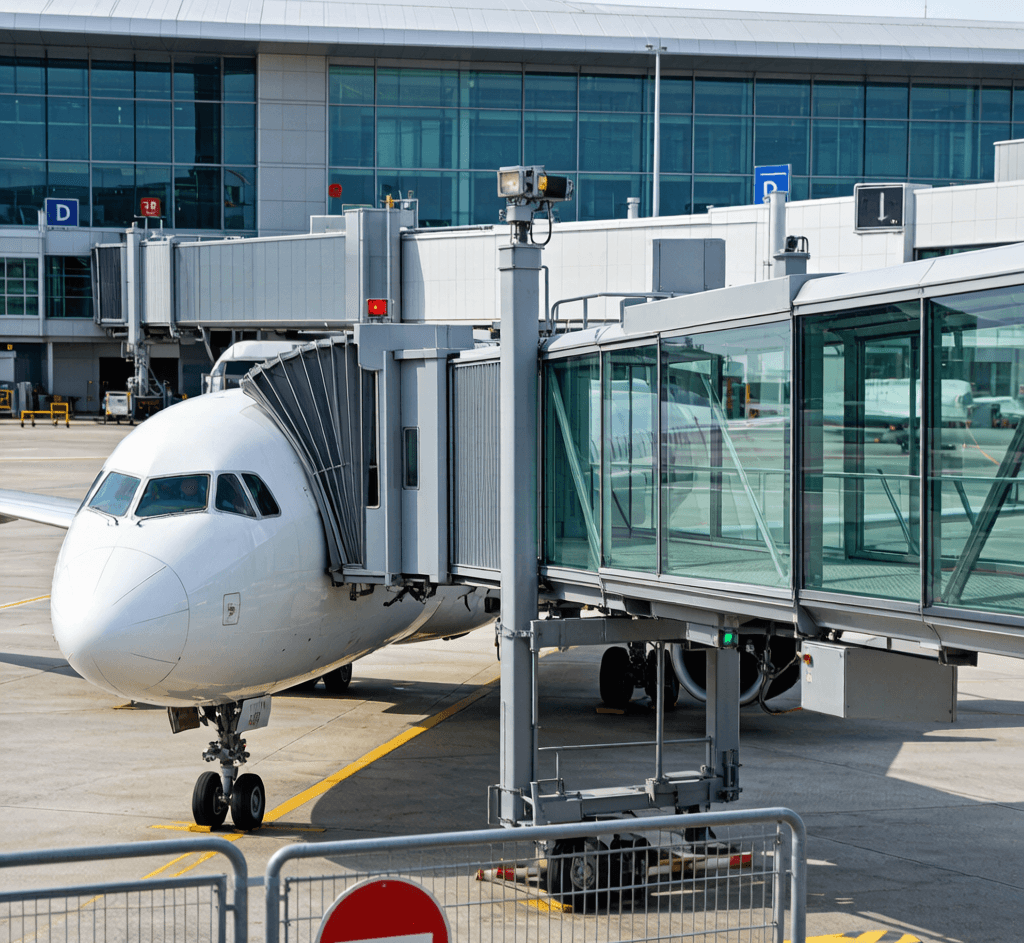
A passenger boarding bridge (PBB), also known as an aerobridge, jet bridge, jetway, or passenger walkway, is a piece of airport ground support equipment that provides a safe, weather-protected passage between the terminal building and the aircraft door. The PBB is a motorized structure mounted on wheels or rails, capable of rotating, extending, and adjusting height to align with different aircraft door sill heights.
The primary functions of a passenger boarding bridge include:
· Passenger safety: Eliminating the need for passengers to walk on the apron, reducing exposure to ground vehicle traffic and weather hazards
· Weather protection: Providing an enclosed, climate-controlled corridor in extreme heat, cold, rain, or dust
· Operational efficiency: Enabling faster boarding and deplaning compared to remote stands with bus transfers
· Accessibility: Accommodating wheelchair users and passengers with reduced mobility without special ground equipment
· Security: Maintaining a controlled access path between the terminal's sterile area and the aircraft
Types of Passenger Boarding Bridges
Glass-Walled Boarding Bridges
Glass-walled boarding bridges feature transparent panels along the walkway walls, offering passengers panoramic views of the apron, runway, and aircraft. These bridges are increasingly popular at modern international terminals where passenger experience is a priority.
Advantages:
· Enhanced passenger experience with natural light and views
· Modern aesthetic that elevates terminal appearance
· Better visibility for operators during aircraft docking
Considerations:
· Higher initial cost compared to steel-walled bridges
· Requires regular cleaning to maintain transparency
· Glass panels need UV protection for hot climate deployments
Steel-Walled Boarding Bridges
Steel-walled boarding bridges use solid metal panels and are the most common type worldwide, particularly at regional and domestic airports. They are durable, cost-effective, and well-suited to harsh environmental conditions.
Advantages:
· Lower procurement and maintenance costs
· Superior durability in extreme weather (sandstorms, heavy snow, high humidity)
· Better insulation for extreme temperature environments
· Easier to repair with standard materials
Considerations:
· Enclosed feel without natural light
· Requires artificial lighting at all times
Commuter and Regional Boarding Bridges
Commuter boarding bridges are designed for smaller aircraft such as turboprops (ATR 72, Q400) and regional jets (CRJ, ERJ). They are shorter, lighter, and can accommodate the lower door sill heights typical of regional aircraft.
Advantages:
· Specifically designed for regional aircraft door heights (1.5–2.5 meters)
· Lower cost and smaller footprint
· Faster installation and commissioning
Considerations:
· Limited compatibility with narrow-body and wide-body aircraft
· May require a separate bridge for mixed-fleet gates
Dual-Boarding Bridges
Dual-boarding bridges use two separate walkways to connect to the front and rear doors of narrow-body aircraft (such as the A320 or B737) simultaneously. This configuration significantly reduces boarding and deplaning time.
Advantages:
· Reduces turnaround time by up to 40% for narrow-body aircraft
· Improves on-time performance for high-frequency operations
· Better passenger flow during peak hours
Key Selection Criteria for Airport Boarding Bridges
Aircraft Compatibility

Modern boarding bridges offer two primary drive systems:
Diesel-hydraulic drive: Traditional system with a diesel engine powering hydraulic motors. Suitable for airports without reliable shore power. Requires regular engine maintenance and fuel supply.
Electric drive: Increasingly preferred for new installations. Electric motors powered by shore power or battery packs offer quieter operation, lower maintenance, and zero emissions at the gate. Electric drive systems reduce operational costs by approximately 30% compared to diesel-hydraulic systems over a 10-year lifecycle.
Climate and Environmental Considerations
For airports in Haisen's target markets, climate resilience is essential:
· Middle East: High-temperature resistance (up to 55°C), sandstorm protection seals, UV-resistant materials, and enhanced air conditioning
· Central Asia: Cold-weather packages rated to -40°C, heated flooring, de-icing capabilities, and snow-load-rated structures
· Africa: Dust ingress protection, corrosion-resistant coatings for coastal airports, and reliable operation in high-humidity environments
· Latin America: Tropical climate packages with mold-resistant materials, lightning protection, and seismic-rated structures
Safety Features
Essential safety features for modern boarding bridges include:
· Auto-leveling system: Maintains bridge height alignment with aircraft door as the aircraft settles during boarding/loading
· Collision avoidance sensors: Ultrasonic or laser sensors that prevent the bridge cab from contacting the aircraft fuselage
· Emergency stop: Multiple e-stop buttons accessible from operator station and walkway
· Fire suppression: Automatic fire detection and suppression system in the bridge cab and machinery compartment
· Backup power: Battery or manual crank system for emergency bridge retraction
· Anti-slip flooring: Textured flooring materials rated for wet and oily conditions
Safety Standards and Compliance
Passenger boarding bridges must comply with multiple international standards:
· ICAO Annex 14, Volume I, Chapter 5: Specifies requirements for aircraft stand taxilanes and passenger loading bridges
· ISO 15893: Aircraft ground support equipment — passenger boarding bridges
· NFPA 415: Standard on Airport Terminal Buildings, Fueling Ramp Drainage, and Loading Walkways (fire safety)
· ADA / PRM compliance: Accessibility requirements for persons with reduced mobility
· Local aviation authority regulations: Each country's civil aviation authority may have additional requirements
For airports in ICAO member states, compliance with ICAO Doc 9137 (Airport Services Manual) is mandatory. Haisen Global boarding bridges are designed and manufactured to meet these international standards, with ISO 9001 certified production processes.
Maintenance Best Practices
Daily Inspections
· Visual inspection of bridge cab, canopy, and bellows for damage
· Check auto-leveling system functionality
· Verify safety sensors and emergency stop buttons
· Inspect flooring for wear or damage
· Test lighting and climate control systems
Quarterly Maintenance
· Lubricate all moving joints and drive mechanisms
· Inspect hydraulic system for leaks and fluid levels
· Calibrate collision avoidance sensors
· Check electrical connections and cable management
· Inspect structural welds for cracks or corrosion
Annual Overhaul
· Full structural inspection by certified engineer
· Replace worn drive wheels and tires
· Comprehensive hydraulic system flush and fluid replacement
· Update auto-leveling and control system firmware
· Recalibrate all safety systems to factory specifications
· Load test to verify structural integrity
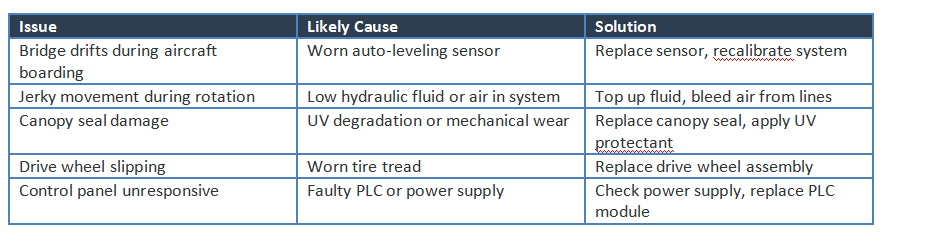
Why Choose Haisen Boarding Bridges
Haisen Global manufactures automatic boarding bridges designed for reliability in demanding environments. Key features include:
· Energy-efficient electric drive: Reduces operational costs and environmental impact
· Low-maintenance design: Modular components for easy replacement and repair
· Climate-adapted construction: Customized packages for extreme temperature, humidity, and dust conditions
· ICAO-compliant safety systems: Full suite of collision avoidance, auto-leveling, and emergency systems
· Multi-aircraft compatibility: Adjustable to serve regional jets through wide-body aircraft
· Spare parts availability: Regional warehousing ensures rapid parts delivery to airports in Africa, Middle East, Central Asia, and Latin America
For airports operating in emerging markets where technical support infrastructure may be limited, Haisen's low-maintenance design philosophy and comprehensive spare parts program are particularly valuable.
FAQ: Airport Passenger Boarding Bridges
How long does a passenger boarding bridge last?
A well-maintained passenger boarding bridge typically has a service life of 20–30 years. The structural framework can last 30+ years, while drive systems, control electronics, and wearable components (wheels, seals, bellows) require replacement every 5–10 years depending on usage intensity and environmental conditions.
How much does an airport boarding bridge cost?
The cost of a passenger boarding bridge varies significantly based on type, specifications, and customization. Steel-walled bridges for narrow-body aircraft typically range from $250,000 to $500,000, while glass-walled bridges for wide-body aircraft can exceed $800,000. Commuter bridges for regional aircraft start at approximately $150,000. Installation, commissioning, and site preparation add 20–30% to the equipment cost.
Can one boarding bridge serve all aircraft types?
A single boarding bridge designed for narrow-body and wide-body aircraft (door sill height 2.0–5.5 m) can serve most commercial jets. However, regional turboprops and commuter jets with door sill heights below 2.0 meters require a dedicated commuter bridge or a bridge with extended vertical travel range. Dual-boarding bridge configurations can serve both front and rear doors of narrow-body aircraft simultaneously.
What maintenance does a boarding bridge require?
Passenger boarding bridges require daily visual inspections, quarterly preventive maintenance (lubrication, sensor calibration, hydraulic checks), and annual comprehensive inspections including structural assessment and load testing. Haisen Global provides detailed maintenance manuals and can arrange on-site training for airport maintenance personnel.
Are Haisen boarding bridges compatible with existing terminal infrastructure?
Yes. Haisen boarding bridges are designed with flexible mounting interfaces that can be adapted to most existing terminal gate configurations. During the project planning phase, Haisen's engineering team conducts a site assessment to verify structural compatibility, power supply requirements, and any necessary modifications to the terminal interface.
About Haisen Global: Haisen Technology Co., Ltd. (Haisen Global) is a Hong Kong-based aviation ground support equipment manufacturer founded in 2009. The company designs and produces runway friction testers, aviation weather observation systems, anti-drone defense systems, RVR measurement equipment, and aircraft boarding bridges, serving over 200 airports across Africa, the Middle East, Central Asia, and Latin America.
For inquiries about passenger boarding bridges or other airport ground support equipment, contact Haisen Global at haisenglobal.com.