The Essential Features of Aviation Automatic Weather Observation Station are the backbone of modern aviation safety and operational efficiency. These cutting-edge systems, engineered to deliver precise, real-time meteorological data, have revolutionized how airports, pilots, and air traffic controllers navigate the dynamic challenges of weather-related flight operations. In an industry where even the slightest weather fluctuation can impact takeoffs, landings, and in-flight safety, Aviation Automatic Weather Observation Stations (AWOS) stand as indispensable tools, integrating advanced sensors, continuous monitoring capabilities, and data-driven insights to ensure seamless air travel. From small regional airports to major international hubs, the deployment of these systems has become a non-negotiable standard, underscoring their critical role in mitigating risks, optimizing flight plans, and enhancing overall aviation productivity.
What Are Aviation Automatic Weather Observation Stations?
Aviation Automatic Weather Observation Stations, commonly referred to as AWOS, are sophisticated, fully automated meteorological systems designed specifically to meet the rigorous demands of the aviation industry. Unlike traditional manual weather observation methods, which are prone to human error, delays, and limitations in coverage, AWOS leverages state-of-the-art technology to collect, process, and disseminate real-time weather data 24 hours a day, 7 days a week. These systems are strategically installed at airports worldwide, positioned to capture a comprehensive range of key weather parameters that directly influence flight safety and performance.
At their core, Aviation Automatic Weather Observation Stations are equipped with an array of specialized sensors, each calibrated to measure critical meteorological variables with exceptional accuracy. These parameters include temperature (both surface and ambient), wind speed and direction (including gusts), visibility (horizontal and vertical), cloud height and coverage, atmospheric pressure (station and sea-level), and in some advanced configurations, precipitation type and intensity. The integration of these sensors allows AWOS to provide a holistic view of current weather conditions, enabling aviation professionals to make informed decisions that prioritize safety while maximizing operational efficiency.
One of the defining characteristics of modern Aviation Automatic Weather Observation Stations is their ability to deliver data in real time. This means that pilots preparing for takeoff, air traffic controllers managing airspace, and airport operations teams coordinating ground activities have instant access to the latest weather updates. Whether it’s a sudden shift in wind direction, a drop in visibility due to fog, or a change in atmospheric pressure that affects aircraft performance, AWOS ensures that these critical changes are detected and communicated without delay. This real-time functionality is particularly vital in adverse weather conditions, where split-second decisions can mean the difference between a safe flight and a potential incident.
Besides,Aviation Automatic Weather Observation Stations are designed to be highly reliable and resilient, capable of operating in extreme environmental conditions. From scorching deserts to freezing polar regions, from high-altitude mountain airports to coastal facilities prone to hurricanes and typhoons, these systems are built to withstand harsh weather and continue delivering accurate data. This durability is achieved through robust hardware design, weatherproof enclosures, and advanced self-diagnostic features that allow for proactive maintenance and minimal downtime. For airports operating in remote or challenging locations, this reliability is especially valuable, as it eliminates the need for constant on-site human monitoring while ensuring consistent data collection.

Key Functions of Aviation Automatic Weather Observation Stations
The functionality of Aviation Automatic Weather Observation Stations extends far beyond simple data collection; these systems are engineered to process, analyze, and distribute weather information in a way that directly supports aviation operations. Below are the core functions that make AWOS an indispensable asset for the aviation industry:
1. Continuous Monitoring of Critical Meteorological Parameters
At the heart of every Aviation Automatic Weather Observation Station is its ability to continuously monitor and measure key weather parameters. Temperature, for instance, is tracked with precision, as it directly impacts air density—a critical factor in aircraft lift and engine performance. A sudden increase or decrease in temperature can alter an aircraft’s required takeoff distance, fuel consumption, and overall handling characteristics. By providing real-time temperature data, AWOS enables pilots to adjust their flight plans and operational procedures accordingly, ensuring optimal performance and safety.
Wind speed and direction are equally critical, particularly during takeoff and landing. Crosswinds, gusts, and sudden shifts in wind direction can pose significant challenges to pilots, increasing the risk of runway excursions or loss of control. Aviation Automatic Weather Observation Stations use high-precision anemometers to measure wind conditions at multiple heights (typically 10 meters above the ground, as specified by aviation standards) and update this data at frequent intervals—often every few seconds. This allows pilots to assess wind conditions in real time, select the most suitable runway, and adjust their approach and takeoff speeds to account for wind effects. For example, a pilot encountering strong crosswinds can use AWOS data to calculate the maximum allowable crosswind component for their aircraft, ensuring a safe landing.
Visibility and cloud height are two other parameters that AWOS monitors with exceptional accuracy. Visibility is measured using forward-scatter sensors or transmissometers, which detect the presence of fog, mist, rain, snow, or dust that can reduce visibility below safe thresholds. Cloud height, meanwhile, is determined by ceilometers—laser or optical sensors that measure the distance from the ground to the base of the lowest cloud layer. Both visibility and cloud height are critical for determining whether a flight can take off or land under Visual Flight Rules (VFR) or Instrument Flight Rules (IFR). For instance, if visibility drops below the minimum required for VFR operations, pilots must switch to IFR and rely on their instruments, with air traffic controllers using AWOS data to manage aircraft spacing and approach sequences.
Atmospheric pressure is another key parameter tracked by Aviation Automatic Weather Observation Stations. Changes in atmospheric pressure can indicate approaching weather systems, such as low-pressure fronts that bring rain, wind, or turbulence. By monitoring sea-level pressure and pressure trends, AWOS provides valuable insights into upcoming weather changes, allowing pilots and air traffic controllers to plan ahead and avoid potential hazards. For example, a rapid drop in pressure may signal an approaching storm, prompting air traffic controllers to adjust flight schedules or reroute aircraft to safer airspace.
2. Data Processing and Analysis
Aviation Automatic Weather Observation Stations do more than just collect raw data—they process and analyze it to generate actionable insights. Advanced software algorithms filter out noise and errors from sensor readings, ensuring that the data provided to aviation professionals is accurate and reliable. For example, if a wind sensor temporarily malfunctions, the AWOS software will detect the anomaly and either correct the data using backup sensors or flag the issue for maintenance, preventing the dissemination of incorrect information.
In addition to filtering and validating data, Aviation Automatic Weather Observation Stations also analyze weather trends over time. By comparing current data with historical patterns, these systems can identify emerging weather phenomena, such as the formation of fog, the approach of a cold front, or the development of turbulence. This trend analysis is particularly valuable for flight planning, as it allows pilots to anticipate weather changes and adjust their routes accordingly. For instance, if AWOS data shows that fog is expected to form at a destination airport in the next two hours, a pilot can choose to depart earlier or reroute to an alternate airport, avoiding potential delays or diversions.
3. Real-Time Data Dissemination
The value of Aviation Automatic Weather Observation Stations lies not only in their ability to collect and process data but also in their capacity to disseminate it to the right people at the right time. AWOS data is distributed through multiple channels, ensuring that pilots, air traffic controllers, airport operations teams, and meteorologists have instant access to the information they need.
Pilots can access AWOS data through in-cockpit displays, aviation weather apps, or radio communications with air traffic control. This allows them to check weather conditions at their departure airport, destination, and en-route waypoints before and during their flight. For example, a pilot preparing to depart can review real-time wind speed, visibility, and cloud height data to determine if takeoff is safe, while a pilot in flight can receive updates on weather conditions at their destination, enabling them to adjust their approach if necessary.
Air traffic controllers use Aviation Automatic Weather Observation Stations data to manage air traffic flow and ensure safe separation between aircraft. By monitoring weather conditions in real time, controllers can adjust arrival and departure sequences, reroute aircraft around areas of severe weather, and provide pilots with critical weather updates. For instance, if visibility at an airport drops suddenly, controllers can slow down the arrival rate to give pilots more time to adjust their approaches, reducing the risk of collisions or missed approaches.
Airport operations teams also rely on AWOS data to manage ground activities, such as runway maintenance, de-icing operations, and passenger boarding. For example, if AWOS data indicates that snow is expected to fall, airport teams can pre-position snowplows and de-icing equipment, ensuring that runways and taxiways remain safe and operational. Similarly, if wind speeds exceed safe limits for ground operations, teams can suspend boarding or delay aircraft pushback until conditions improve.
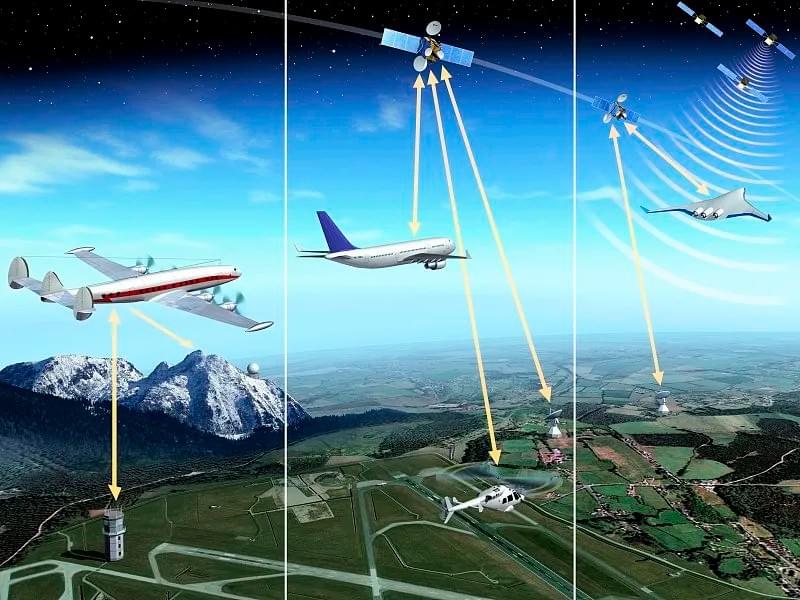
Essential Features of Haisen’s Aviation Automatic Weather Observation Station
Haisen’s Aviation Automatic Weather Observation Station stands out as a leader in the industry, combining advanced technology, robust design, and user-centric features to meet the evolving needs of the aviation sector. Below are the key features that make Haisen’s AWOS a top choice for airports worldwide:
1. Advanced Sensor Technology for Precise Measurements
Haisen’s Aviation Automatic Weather Observation Station is equipped with a suite of high-precision sensors, each selected for its reliability, accuracy, and ability to perform in extreme conditions. The system includes:
- Anemometers: These sensors measure wind speed and direction with exceptional precision, even in gusty or turbulent conditions. Haisen’s anemometers use ultrasonic technology, which eliminates moving parts, reducing wear and tear and ensuring long-term reliability.
- Ceilometers: Haisen’s ceilometers use laser technology to measure cloud height with accuracy up to 12 kilometers, providing real-time data on cloud coverage and base height. This is critical for determining IFR/VFR conditions and supporting safe approach and landing operations.
- Transmissometers/Forward-Scatter Sensors: These sensors measure visibility by detecting the scattering or transmission of light through the atmosphere. Haisen’s sensors are highly sensitive, capable of detecting visibility changes as small as 10 meters, ensuring that pilots and controllers are alerted to deteriorating conditions early.
- Barometers: Haisen’s barometers measure atmospheric pressure with precision, providing data on sea-level pressure and pressure trends. This information is used to predict weather changes and support flight planning.
- Temperature and Humidity Sensors: These sensors track surface and ambient temperature, as well as relative humidity, providing data that influences air density, aircraft performance, and the formation of fog or ice.
The integration of these advanced sensors ensures that Haisen’s Aviation Automatic Weather Observation Station delivers accurate, reliable data across all critical meteorological parameters, giving aviation professionals the confidence to make informed decisions.
2. Real-Time Data Updates and Forecasting
Haisen’s Aviation Automatic Weather Observation Station provides real-time data updates, with measurements taken and transmitted at intervals as short as 1 second. This ensures that pilots, air traffic controllers, and airport operations teams have access to the most current weather information, enabling them to respond quickly to changing conditions. In addition to real-time updates, the system also offers short-term weather forecasting, using historical data and advanced algorithms to predict weather conditions up to 24 hours in advance. This forecasting capability is invaluable for flight planning, allowing pilots to anticipate weather changes and adjust their routes or schedules accordingly. For example, if the forecast predicts a drop in visibility at a destination airport, a pilot can choose to depart earlier or select an alternate route, minimizing delays and ensuring a safe flight.
3. 24/7 Continuous Operation and Reliability
Haisen’s Aviation Automatic Weather Observation Station is designed for non-stop operation, with a robust hardware platform and redundant systems that ensure maximum uptime. The system’s sensors and components are housed in weatherproof enclosures, protecting them from extreme temperatures, rain, snow, dust, and other environmental hazards. Additionally, the system includes self-diagnostic features that monitor sensor performance and alert maintenance teams to potential issues before they affect data collection. This proactive maintenance capability minimizes downtime and ensures that the system remains operational even in the most challenging conditions. For airports that operate around the clock, this 24/7 reliability is critical, as any interruption in weather data collection could compromise flight safety and operational efficiency.
4. Seamless Integration with Aviation Systems
Haisen’s Aviation Automatic Weather Observation Station is designed to integrate seamlessly with a wide range of aviation systems, including air traffic control systems, flight planning software, in-cockpit displays, and airport operations management platforms. This integration allows for the seamless flow of weather data between systems, eliminating the need for manual data entry and reducing the risk of errors. For example, AWOS data can be automatically fed into air traffic control systems, providing controllers with real-time weather information alongside flight data, enabling them to make more informed decisions about aircraft spacing and routing. Similarly, flight planning software can use AWOS data to generate optimal flight routes that avoid adverse weather conditions, reducing fuel consumption and travel time.
5. User-Friendly Interface and Customization
Haisen’s Aviation Automatic Weather Observation Station features a user-friendly interface that makes it easy for aviation professionals to access and interpret weather data. The system’s dashboard displays key parameters in a clear, intuitive format, with color-coded alerts for critical conditions (such as low visibility or high winds). Users can customize the dashboard to display the data most relevant to their needs, whether it’s wind speed and direction for pilots or visibility and cloud height for air traffic controllers. Additionally, the system supports multiple data formats, including standard aviation protocols such as METAR (Meteorological Aerodrome Report) and TAF (Terminal Aerodrome Forecast), ensuring compatibility with existing aviation systems and processes.
ASOS vs. AWOS: Understanding the Differences
While Aviation Automatic Weather Observation Stations (AWOS) are critical to aviation operations, they are often compared to Automated Surface Observing Systems (ASOS). Both systems are designed to collect and disseminate weather data for aviation purposes, but there are key differences in their sensor configurations, reporting intervals, and capabilities. Understanding these differences is essential for airports and aviation authorities when selecting the right system for their needs.
What is ASOS?
Automated Surface Observing Systems (ASOS) are fully automated weather stations developed by the National Weather Service (NWS) in the United States, in collaboration with the Federal Aviation Administration (FAA) and the Department of Defense (DoD). ASOS is designed to provide comprehensive weather data for aviation, meteorological research, and climate monitoring. These systems are typically installed at major airports and are equipped with a wide range of sensors to measure temperature, wind speed and direction, visibility, precipitation (type and intensity), cloud height, and atmospheric pressure. ASOS reports data at frequent intervals—usually every minute—and disseminates it in standard formats such as METAR and TAF. One of the key features of ASOS is its ability to detect and report precipitation type, including rain, snow, sleet, and hail, which is particularly valuable for aviation operations in regions with variable weather conditions.
What is AWOS?
Aviation Automatic Weather Observation Stations (AWOS) are similar to ASOS in that they collect and disseminate real-time weather data for aviation purposes. However, AWOS systems are typically more flexible in terms of sensor configurations and reporting intervals, making them suitable for a wider range of airports, including regional, municipal, and private facilities. Unlike ASOS, which is a standardized system developed by government agencies, AWOS systems are offered by private manufacturers (such as Haisen) and can be customized to meet the specific needs of an airport. For example, a small regional airport may only require sensors for wind speed, visibility, and temperature, while a larger airport may need additional sensors for precipitation and cloud height. AWOS systems also vary in their reporting intervals, with some reporting data every few seconds and others every few minutes, depending on the needs of the airport.
Key Differences Between ASOS and AWOS
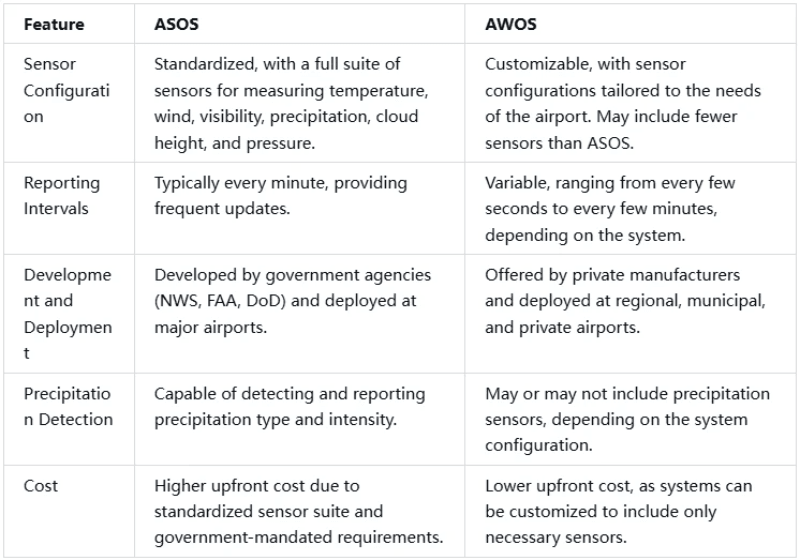
Despite these differences, both ASOS and AWOS play critical roles in aviation safety and operations. Major airports often use ASOS for its comprehensive sensor suite and frequent reporting intervals, while regional and municipal airports may opt for AWOS due to its flexibility and lower cost. Regardless of the system selected, the core goal remains the same: to provide accurate, real-time weather data that enables pilots, air traffic controllers, and airport operations teams to make informed decisions.
Benefits of Implementing Aviation Automatic Weather Observation Stations
The deployment of Aviation Automatic Weather Observation Stations offers a wide range of benefits for airports, airlines, pilots, and passengers. Below are some of the key advantages of implementing these systems:
1. Enhanced Aviation Safety
The primary benefit of Aviation Automatic Weather Observation Stations is their ability to enhance aviation safety. By providing real-time, accurate weather data, these systems enable pilots to make informed decisions about takeoffs, landings, and in-flight operations, reducing the risk of weather-related accidents. For example, if AWOS data indicates that visibility has dropped below the minimum required for VFR operations, pilots can switch to IFR and rely on their instruments, avoiding the risk of flying into low-visibility conditions. Similarly, real-time wind data helps pilots avoid crosswinds that could lead to runway excursions or loss of control during landing. Additionally, AWOS data helps air traffic controllers manage air traffic flow more effectively, ensuring safe separation between aircraft and reducing the risk of collisions.
2. Improved Flight Planning and Operational Efficiency
Aviation Automatic Weather Observation Stations provide pilots with the data they need to plan flights more efficiently, optimizing fuel consumption and reducing travel time. By accessing real-time weather data on temperature, wind speed, and atmospheric pressure, pilots can calculate the most efficient flight routes and altitudes, taking advantage of tailwinds and avoiding headwinds. For example, a pilot can use AWOS data to identify a route with favorable wind conditions, reducing fuel consumption by up to 10% and shortening travel time by avoiding turbulence or adverse weather. Additionally, short-term weather forecasting from AWOS allows pilots to anticipate weather changes and adjust their plans accordingly, minimizing delays and diversions. This improved operational efficiency not only benefits airlines by reducing costs but also enhances the passenger experience by ensuring on-time arrivals and departures.
3. Cost Savings for Airlines and Airports
Implementing Aviation Automatic Weather Observation Stations can lead to significant cost savings for airlines and airports. For airlines, the ability to optimize flight routes and reduce fuel consumption directly translates to lower operational costs. Additionally, by avoiding weather-related delays and diversions, airlines can reduce expenses associated with missed connections, hotel accommodations for passengers, and aircraft downtime. For airports, AWOS systems reduce the need for manual weather observations, eliminating the cost of hiring and training weather observers. Additionally, the real-time data provided by AWOS helps airports manage ground operations more efficiently, reducing the cost of de-icing, snow removal, and runway maintenance. For example, if AWOS data indicates that snow is not expected to fall, airport teams can reallocate resources to other tasks, saving time and money.
4. Compliance with Aviation Regulations
Many aviation regulatory bodies, including the International Civil Aviation Organization (ICAO) and the Federal Aviation Administration (FAA), require airports to have reliable weather observation systems in place. Aviation Automatic Weather Observation Stations meet these regulatory requirements, ensuring that airports remain compliant and avoid penalties. For example, the FAA mandates that airports serving commercial air traffic have a weather observation system that can provide real-time data on visibility, cloud height, and wind speed. AWOS systems not only meet these requirements but also exceed them by providing additional data on temperature, atmospheric pressure, and other critical parameters. By implementing AWOS, airports can demonstrate their commitment to safety and compliance, enhancing their reputation among airlines and regulatory bodies.
5. Support for Meteorological Research and Climate Monitoring
In addition to supporting aviation operations, Aviation Automatic Weather Observation Stations also contribute to meteorological research and climate monitoring. The data collected by these systems is used by meteorologists to analyze weather patterns, develop more accurate forecasts, and issue warnings for severe weather events. This information is also valuable for climate research, as it provides long-term data on temperature, precipitation, and other atmospheric conditions. By contributing to these research efforts, AWOS systems help improve our understanding of weather and climate, leading to better preparedness for extreme weather events and a more sustainable aviation industry.
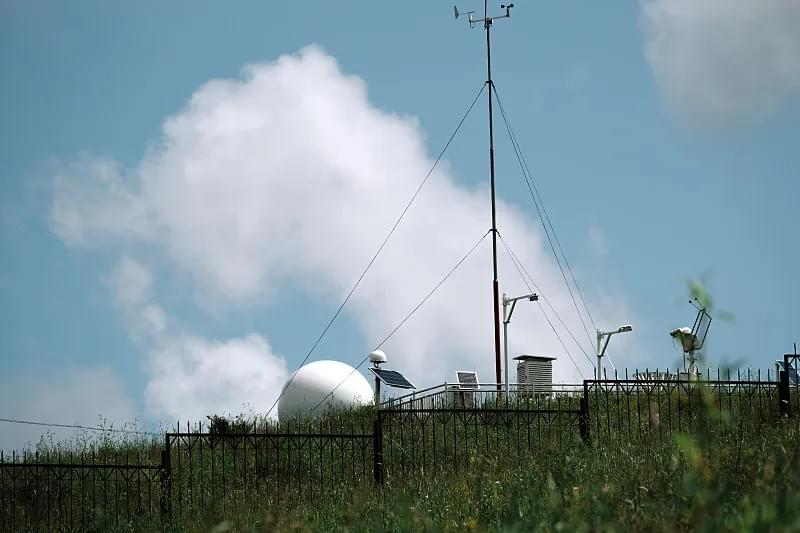
Why Choose Haisen’s Aviation Automatic Weather Observation Station?
With so many AWOS systems available on the market, airports and aviation authorities need to select a solution that offers the right combination of performance, reliability, and value. Haisen’s Aviation Automatic Weather Observation Station stands out from the competition for several key reasons:
1. Industry-Leading Accuracy and Precision
Haisen’s AWOS is built with high-precision sensors and advanced data processing algorithms, ensuring that the data provided is accurate and reliable. The system undergoes rigorous testing to meet international aviation standards, including those set by the ICAO and FAA. Whether measuring wind speed, visibility, or cloud height, Haisen’s AWOS delivers data with a high degree of precision, giving aviation professionals the confidence to make critical decisions.
2. Customizable Solutions for Every Airport
Haisen understands that every airport has unique needs and requirements. That’s why their Aviation Automatic Weather Observation Station is fully customizable, allowing airports to select the sensors and features that best meet their operational needs. Whether it’s a small regional airport that only requires basic weather data or a major international hub that needs a comprehensive system with advanced forecasting capabilities, Haisen can tailor a solution to fit. This customization not only ensures that airports get the most value for their investment but also allows them to scale their system as their needs grow.
3. Exceptional Reliability and Durability
Haisen’s Aviation Automatic Weather Observation Station is designed to operate in the most challenging environmental conditions. The system’s sensors and components are built to withstand extreme temperatures, humidity, rain, snow, and dust, ensuring that it remains operational even in harsh weather. Additionally, the system includes redundant components and self-diagnostic features that minimize downtime and ensure continuous data collection. For airports operating in remote or extreme locations, this reliability is particularly valuable, as it eliminates the need for constant on-site maintenance.
4. Seamless Integration and User-Friendly Design
Haisen’s AWOS is designed to integrate seamlessly with existing aviation systems, including air traffic control platforms, flight planning software, and in-cockpit displays. This integration ensures that weather data flows smoothly between systems, reducing the need for manual data entry and improving operational efficiency. Additionally, the system’s user-friendly interface makes it easy for aviation professionals to access and interpret data, with customizable dashboards and clear, intuitive visuals. Whether you’re a pilot checking weather conditions before takeoff or an air traffic controller managing a busy airspace, Haisen’s AWOS provides the information you need in a format that’s easy to use.
5. Comprehensive Support and Maintenance
Haisen is committed to providing exceptional customer support and maintenance services. Their team of experienced technicians is available 24/7 to assist with installation, troubleshooting, and maintenance, ensuring that your AWOS system remains operational at all times. Additionally, Haisen offers regular software updates and calibration services to keep your system up to date with the latest technology and standards. With Haisen’s support, you can have peace of mind knowing that your Aviation Automatic Weather Observation Station is in good hands.
Conclusion: The Future of Aviation Safety Lies in Advanced Weather Observation
As the aviation industry continues to grow and evolve, the importance of reliable, real-time weather data becomes increasingly critical. Aviation Automatic Weather Observation Stations are at the forefront of this effort, providing the data and insights needed to ensure safe, efficient flight operations. From advanced sensor technology to real-time forecasting and seamless integration with aviation systems, these systems are transforming how airports, airlines, and pilots navigate the challenges of weather-related flight operations.
Haisen’s Aviation Automatic Weather Observation Station stands as a testament to the power of innovation in aviation safety. With its industry-leading accuracy, customizable design, exceptional reliability, and user-friendly features, Haisen’s AWOS is the ideal solution for airports of all sizes. Whether you’re looking to enhance safety, improve operational efficiency, reduce costs, or comply with regulatory requirements, Haisen’s Aviation Automatic Weather Observation Station has you covered.
Investing in a high-quality Aviation Automatic Weather Observation Station is not just a smart business decision—it’s a commitment to the safety of passengers, crew, and aircraft. With Haisen’s AWOS, you can rest assured that you’re getting the most advanced, reliable weather observation system on the market, backed by a team of experts dedicated to your success.
Don’t let weather-related challenges compromise your aviation operations. Choose Haisen’s Aviation Automatic Weather Observation Station and take the first step toward a safer, more efficient future for air travel. Contact Haisen today to learn more about their customizable AWOS solutions and how they can meet the unique needs of your airport.