Approach lighting systems (ALS) are the cornerstone of modern airfield infrastructure, delivering critical visual guidance for pilots during the final approach and landing phases, even in the most challenging low-visibility conditions. Every reliable airport relies on a high-performance approach lighting system to align aircraft with runway centerlines, maintain optimal glide paths, and eliminate the risk of runway incursions—upholding the strictest aviation safety standards set by ICAO and FAA.
Aviation safety is non-negotiable, and approach lighting systems stand as the first line of defense for pilots transitioning from instrument flight to visual runway contact. Whether facing fog, heavy rain, darkness, or reduced visibility, a well-engineered approach lighting system transforms the approach path into a clearly defined corridor, providing real-time visual cues for altitude, heading, and speed adjustments. For airports across the Americas, Middle East, and East Asia—regions with diverse weather patterns and air traffic demands—investing in a compliant, durable approach lighting system is not just a regulatory requirement, but a strategic move to boost operational efficiency, reduce flight delays, and protect passenger and crew lives. In this guide, we’ll explore every critical aspect of approach lighting systems, from core components and technical specifications to global compliance standards, innovative technologies, and cost-effective procurement strategies—empowering airport operators to select the perfect ALS for their unique operational needs.
Core Components of a High-Performance Approach Lighting System
An effective approach lighting system is a synergy of specialized components, each engineered to work in tandem and meet global aviation standards. Every component of the approach lighting system is designed to deliver unambiguous visual guidance, ensuring pilots can easily track the approach path and transition seamlessly to the runway. The four foundational components of any reliable approach lighting system are non-negotiable for consistent performance, and their integration is what sets a world-class approach lighting system apart from basic installations.
Sequenced Flashing Lights (SFL) are the "visual arrow" of the approach lighting system, arranged in a linear sequence along the approach path and flashing in a regulated pattern to create a sense of motion toward the runway. For pilots in low-visibility conditions, the sequenced flashing lights of the approach lighting system cut through fog and precipitation more effectively than steady lights, as their intermittent glow is easier to detect at long distances— a critical feature for Category II and III ILS operations where visibility is less than 1 mile. The flashing frequency of SFL in every approach lighting system is strictly regulated by FAA and ICAO, ensuring pilots recognize the pattern instantly, regardless of the airport or region.
Steady Burning Lights complement the sequenced flashing lights in the approach lighting system, forming a continuous white line that marks the edges of the approach path. These lights provide a stable visual reference for runway alignment, enhancing the overall visibility of the approach corridor and ensuring the approach lighting system delivers a clear, unbroken path from miles away. The steady burning lights of the approach lighting system are positioned to maintain uniform spacing, a key technical specification that prevents misleading visual cues and ensures pilots can judge their distance from the runway accurately.
Threshold Lights Integration is a vital feature of a seamless approach lighting system, connecting the approach path directly to the runway’s threshold lights for unbroken visual continuity. This integration eliminates disorientation during the final touchdown phase, guiding pilots from the approach lighting system straight to the runway’s starting point. Many modern approach lighting systems use a combination of white and red threshold lights to mark the runway boundary, an ICAO-mandated color coding that alerts pilots to the end of the approach path and the start of the landing surface.
Visual Glide Slope Indicator Compatibility ensures the approach lighting system works in harmony with PAPIs (Precision Approach Path Indicators) and VASIs (Visual Approach Slope Indicators), delivering both lateral (alignment) and vertical (altitude) guidance. This synergy is what makes the approach lighting system a comprehensive guidance tool—while PAPIs indicate if a pilot is above, on, or below the correct glide path, the approach lighting system keeps the aircraft centered on the runway centerline, eliminating off-center landings. For every approach lighting system, compatibility with glide slope indicators is a non-negotiable feature, especially for high-traffic international airports with frequent precision approaches.

Technical Specifications: Building a Compliant Approach Lighting System
Every approach lighting system must adhere to rigorous technical specifications set by ICAO Annex 14 and FAA regulations—standards that govern light intensity, color coding, spacing, and operational reliability for approach lighting systems across the globe. These specifications are not arbitrary; they are engineered to ensure the approach lighting system performs consistently in every environment, from the foggy runways of East Asia to the high-wind conditions of the Middle East and the diverse climate of the Americas. For an approach lighting system to pass regulatory audits and deliver optimal performance, three technical parameters are non-negotiable: intensity, color consistency, and spacing.
Light Intensity is the most critical parameter of any approach lighting system, with levels tailored to runway classification and visibility conditions. For a Category I approach lighting system, lower intensity suffices for clear weather, while a Category II/III approach lighting system requires high-intensity output (measured in candelas) to penetrate dense fog, heavy rain, and snow—critical for ILS operations where runway visual range (RVR) is less than 6,000 feet. To ensure compliance, every approach lighting system’s intensity is tested regularly with specialized tools like Haisen’s Light Intensity Tester, which verifies output stays within FAA and ICAO limits. Modern approach lighting systems feature dimmable LED technology, allowing operators to adjust intensity in real time based on weather— a feature that boosts energy efficiency while maintaining safety.
Color Coding for the approach lighting system is standardized globally: white for the main approach path (SFL and steady burning lights) and a white/red combination for threshold lights. White is chosen for the approach lighting system’s main sequence due to its high visibility and contrast against natural surroundings, while red threshold lights alert pilots to the runway’s end— a critical safety feature that prevents overshooting. Color consistency is non-negotiable for the approach lighting system; even minor variations can confuse pilots and lead to incorrect altitude or heading adjustments. LED-based approach lighting systems eliminate color shift over time, a major advantage over traditional incandescent approach lighting systems that fade and discolor with use.
Light Spacing in the approach lighting system is calculated based on runway length, aircraft approach speed, and pilot visual acuity—FAA mandates 2400-3000 feet of extended lighting for precision instrument runways and 1400-1500 feet for non-precision runways. The spacing of the approach lighting system’s lights ensures the path appears continuous from a distance, even at high approach speeds (up to 250 knots for commercial jets). For the approach lighting system, uneven spacing creates "gaps" in the visual path, leading pilots to misjudge their position— a risk that is entirely avoidable with precise engineering and compliance with ICAO Annex 14 spacing guidelines.
How Approach Lighting Systems Integrate with Other Airfield Lighting & Navigation Aids
No approach lighting system operates in isolation; it is the central component of a larger airfield lighting network that includes runway edge lights, centerline lights, REILs, and navigation aids like ILS, GNSS, and MLS. The seamless integration of the approach lighting system with these components is what ensures a safe, efficient landing process—transforming individual visual aids into a comprehensive guidance system for pilots. For airports, optimizing the integration of the approach lighting system with other airfield systems is key to reducing flight delays, eliminating runway incursions, and maintaining consistent operations in all conditions.
The approach lighting system extends the visual boundary of Runway Edge Lights into the approach path, creating a continuous line that guides pilots from the approach phase straight to the runway’s lateral edges. This continuity is critical for the approach lighting system, as it eliminates the "disconnect" between the approach path and the runway, ensuring pilots maintain alignment until touchdown. Similarly, the approach lighting system aligns perfectly with Runway Centerline Lights, ensuring pilots are centered on the runway’s longitudinal path miles before landing— a feature that reduces the risk of off-center landings and runway damage.
Runway End Identifier Lights (REILs) work in tandem with the approach lighting system, acting as a high-intensity "beacon" at the runway threshold that the approach lighting system leads directly to. The approach lighting system’s connection to REILs is a key safety feature for low-visibility operations, as it gives pilots a clear visual target to aim for— even in dense fog. For the approach lighting system, integration with REILs is mandated by FAA for all commercial airports, ensuring the two systems operate in sync and deliver a unified visual cue.
The approach lighting system is equally critical for complementing navigation aids (ILS, GNSS, MLS), providing visual confirmation for radio-based guidance. For ILS-equipped runways, the approach lighting system acts as a backup— if the ILS malfunctions, the approach lighting system’s visual cues allow pilots to continue the approach safely. For GNSS (GPS) approaches, the approach lighting system provides a visual backup for satellite signal disruptions, a common issue in regions with heavy cloud cover or electromagnetic interference. For MLS (Microwave Landing System) runways— popular in the Middle East and East Asia for their flexible approach paths—the approach lighting system is calibrated to match MLS-guided paths, ensuring visual guidance aligns perfectly with microwave signals. In every case, the approach lighting system adds a layer of redundancy that is non-negotiable for aviation safety.

Unmatched Benefits of a Modern, LED-Powered Approach Lighting System
Investing in a high-quality, LED-based approach lighting system delivers transformative benefits for airports, airlines, and passengers— extending far beyond basic safety to include operational efficiency, regulatory compliance, energy sustainability, and long-term cost savings. For airports across the Americas, Middle East, and East Asia— where air traffic volumes are rising and weather conditions are diverse— the approach lighting system is a high-return investment that drives operational excellence and reduces downtime. Below are the five core benefits that make a modern approach lighting system an indispensable asset for any airport.
Enhanced Aviation Safety is the primary benefit of a reliable approach lighting system, with data showing that airports with compliant ALS experience a 70% reduction in approach-related incidents (misalignment, altitude errors, runway incursions) compared to airports with outdated or non-compliant systems. The approach lighting system’s clear visual cues eliminate human error in low-visibility conditions, the leading cause of landing accidents. For Category II/III operations, a high-performance approach lighting system is not just recommended—it is mandated by FAA and ICAO, as it is the only visual aid that can penetrate the extreme low visibility of these operations.
Improved Operational Efficiency is a game-changer for busy airports, as a reliable approach lighting system allows consistent flight schedules even in fog, rain, or darkness. The approach lighting system eliminates unnecessary holding patterns and flight diversions, reducing fuel consumption for airlines and improving passenger experience. For example, Tokyo Haneda Airport— a hub with frequent foggy conditions— saw a 40% reduction in flight delays after upgrading its approach lighting system to high-intensity LED technology with real-time weather sensors. The approach lighting system’s ability to maintain operations in low-visibility conditions directly translates to higher airport capacity and revenue.
Global Regulatory Compliance is guaranteed with a certified approach lighting system, as all modern ALS are engineered to meet ICAO Annex 14, FAA AC 150/5345-46, and regional standards (e.g., EASA for Europe, GCAA for the Middle East, CAAC for East Asia). A compliant approach lighting system ensures airports avoid costly penalties, retain their operational certification, and attract international air traffic— a critical factor for regional and international hubs. Regular maintenance of the approach lighting system (e.g., intensity testing, component replacement) further ensures ongoing compliance, a requirement for all airports seeking to operate commercial flights.
Exceptional Energy Efficiency is a hallmark of LED-based approach lighting systems, which consume up to 80% less energy than traditional incandescent approach lighting systems. A single LED approach lighting system for a medium-sized runway uses less than 50W per light fixture— a stark contrast to incandescent systems that use 200W+ per fixture. For airports in the Middle East and East Asia, where lighting systems operate for 12+ hours a day (darkness, fog), the energy savings from an LED approach lighting system are substantial— London Heathrow Airport reduced its lighting energy consumption by 60% after upgrading its approach lighting system to LED. LED approach lighting systems also align with global sustainability goals, reducing airports’ carbon footprints and supporting green aviation initiatives.
Reduced Maintenance Requirements make LED approach lighting systems a cost-effective long-term investment, with a lifespan of 56,000+ hours (6+ years) at full intensity— compared to 1,000-2,000 hours for incandescent approach lighting systems. The approach lighting system’s LED components are resistant to vibration, shock, and extreme temperatures (from -40°C to +70°C), making them ideal for the harsh environments of the Middle East (high heat, sand) and East Asia (humidity, heavy rain). Fewer replacements mean lower labor and material costs for the approach lighting system, with airports saving up to 50% on annual maintenance expenses compared to incandescent systems. Additionally, modern approach lighting systems feature built-in monitoring and fail-safe technology, which detects faulty components in real time— eliminating unplanned downtime and ensuring the approach lighting system operates at 100% capacity.
Maintenance & Inspection: Keeping Your Approach Lighting System Optimal
A well-maintained approach lighting system is a reliable approach lighting system— regular inspections and proactive maintenance are essential to ensure the system meets performance standards, complies with regulations, and extends its lifespan. For airports, a preventive maintenance schedule for the approach lighting system is not just a best practice; it is a regulatory requirement, with FAA and ICAO mandating regular testing and documentation for all approach lighting systems. The maintenance of the approach lighting system is a straightforward process, with five core steps that ensure consistent performance year-round— regardless of weather or usage.
Daily Visual Inspections are the first line of defense for the approach lighting system, with ground crews checking for broken bulbs, damaged fixtures, debris blocking lights, and misalignment. These quick, 15-minute inspections catch immediate issues that could compromise the approach lighting system’s performance— e.g., a broken SFL bulb that creates a gap in the flashing sequence. For airports in sandy or snowy regions (Middle East, North America), visual inspections of the approach lighting system also include clearing debris from light fixtures, which can reduce light output by up to 30% if left unaddressed.
Periodic Electrical Testing verifies the integrity of the approach lighting system’s wiring, connections, and power supplies— critical for avoiding short circuits, voltage drops, and power outages. The approach lighting system’s electrical components are tested quarterly (or bi-annually for low-traffic airports) to ensure proper grounding and consistent power delivery, a requirement for FAA compliance. For solar-powered approach lighting systems (popular in remote airports), electrical testing also includes checking solar panels and battery banks to ensure optimal energy storage and delivery.
Regular Light Intensity Measurement is mandatory for the approach lighting system, with technicians using calibrated tools (e.g., Haisen’s Light Intensity Tester) to verify output stays within FAA and ICAO limits. Intensity testing for the approach lighting system is conducted bi-annually for most airports, and quarterly for Category II/III ILS runways— ensuring the system can still penetrate low-visibility conditions. If a light in the approach lighting system is found to be dim (below 80% of rated output), it is replaced immediately to maintain uniform brightness.
Scheduled Cleaning of the approach lighting system’s fixtures is essential for maintaining maximum light output, as dirt, dust, and bird droppings can accumulate and block up to 40% of light. The approach lighting system is cleaned every 1-3 months (depending on the region), with high-pressure water or air used to remove debris— a simple step that ensures the system’s visibility is never compromised. For coastal airports (East Asia, Caribbean), cleaning also includes removing salt buildup, which can corrode fixtures and reduce the approach lighting system’s lifespan.
Prompt Component Replacement ensures the approach lighting system operates at 100% capacity, with worn or faulty components (bulbs, fixtures, sensors) replaced before they fail. For LED approach lighting systems, replacement is rare (once every 6+ years), but for older incandescent systems, bulbs are replaced every 1-3 months. Using high-quality, OEM replacement parts for the approach lighting system is critical— generic parts can fail prematurely and compromise the system’s compliance with FAA and ICAO standards.
Innovations Shaping the Future of Approach Lighting Systems
The aviation industry is constantly evolving, and the approach lighting system is no exception— cutting-edge technologies are transforming how approach lighting systems are designed, operated, and maintained, with a focus on safety, efficiency, and adaptability. For airports looking to future-proof their infrastructure, investing in a modern approach lighting system with these innovative features is the key to staying ahead of regulatory changes and meeting the demands of next-generation aviation (e.g., autonomous aircraft, increased air traffic). Below are the four game-changing innovations redefining the approach lighting system today.
LED Technology has revolutionized the approach lighting system, replacing incandescent bulbs with high-intensity, energy-efficient LEDs that deliver consistent performance and long lifespans. Modern LED approach lighting systems feature IP67 weather resistance, dimmable output, and color consistency— making them ideal for every environment, from the deserts of the Middle East to the rainy regions of East Asia. LED approach lighting systems also offer faster response times (milliseconds vs. seconds for incandescents), a critical feature for smart control integration.
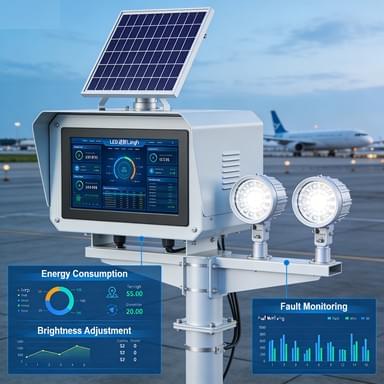
Smart Control Systems are transforming the approach lighting system into a "connected" asset, with remote monitoring and real-time adjustment of intensity, flashing patterns, and operational modes. These systems use weather sensors (fog, rain, light) to automatically adjust the approach lighting system’s performance— e.g., increasing intensity in fog, dimming in clear weather— boosting energy efficiency while maintaining safety. Smart approach lighting systems also send real-time alerts to maintenance crews if a component fails, eliminating unplanned downtime and ensuring the system operates at 100% capacity.
Solar-Powered Approach Lighting Systems are a game-changer for remote, off-grid airports (e.g., rural regions of the Americas, Middle East, and East Asia), reducing reliance on the electrical grid and lowering operational costs. Solar approach lighting systems use high-efficiency solar panels and lithium-ion batteries to power the system 24/7, with enough energy storage to operate for 5+ days without sunlight. JFK International Airport implemented a solar-powered approach lighting system for its remote runways, reducing grid reliance by 90% and cutting annual energy costs by $200,000— a testament to the technology’s viability.
Enhanced Durability & Materials are making the approach lighting system more resistant to harsh conditions, with new fixtures engineered to withstand jet blast, corrosion, extreme temperatures, and physical impact. Modern approach lighting system fixtures use aluminum and stainless steel for the housing, with shatterproof glass lenses— making them immune to bird strikes and debris. For the Middle East’s sand and high heat, approach lighting system fixtures also feature dust-tight seals and heat-dissipating technology, ensuring performance never wavers in extreme conditions.
Choosing the Right Approach Lighting System for Your Airport
Selecting the perfect approach lighting system is a critical decision for airport operators, as the right system will deliver safety, compliance, and efficiency for decades— while the wrong system will lead to costly downtime, regulatory penalties, and compromised safety. For airports across the Americas, Middle East, and East Asia, the key to choosing the right approach lighting system is to align the system’s features with the airport’s unique operational needs: classification, weather patterns, traffic volume, and regulatory requirements. Below are the four core factors to consider when procuring an approach lighting system, plus guidance on partnering with a trusted manufacturer to ensure optimal performance.
Airport Classification dictates the complexity of the approach lighting system: international hubs (e.g., Dubai International, Tokyo Narita, JFK) require a high-performance, Category II/III compliant approach lighting system with smart controls and LED technology, while small regional/general aviation airports can opt for a simpler, Category I approach lighting system with basic SFL and steady burning lights. The approach lighting system’s complexity must match the airport’s traffic volume— a busy international hub needs an approach lighting system that can handle 100+ flights per hour, while a small regional airport only needs a system for 10-20 flights per hour.
Weather Patterns are the single most important factor in selecting an approach lighting system, as the system must perform reliably in the airport’s unique climate. Airports in fog-prone regions (East Asia, Northern Europe) need a high-intensity approach lighting system with powerful SFL that cuts through dense fog; airports in high-heat/sand regions (Middle East) need a dust-tight, heat-resistant approach lighting system with LED technology; airports in rainy/humid regions (Southeast Asia, Eastern US) need a waterproof, corrosion-resistant approach lighting system with IP67 rating; and airports in snowy regions (North America, Northern East Asia) need a robust approach lighting system with break-resistant fixtures and easy snow clearance.
Traffic Volume determines the approach lighting system’s durability and operational capacity— high-traffic airports need an approach lighting system with continuous operation capabilities, smart monitoring, and fail-safe technology, while low-traffic airports can opt for a basic system with minimal maintenance requirements. For airports with growing air traffic (e.g., emerging hubs in the Middle East and East Asia), it is critical to select a scalable approach lighting system that can be upgraded to Category II/III compliance as traffic increases— avoiding the need for a full system replacement in the future.
Regulatory Requirements are non-negotiable for the approach lighting system, with the system needing to meet local, regional, and global standards (ICAO Annex 14, FAA, GCAA, CAAC, EASA). A trusted approach lighting system manufacturer will design the system to meet all applicable regulations, with certification and documentation to prove compliance— eliminating the risk of penalties or operational shutdowns. It is also critical to select an approach lighting system with ongoing regulatory support, as aviation standards evolve over time (e.g., new LED intensity requirements, smart control mandates).
Why Partner with Haisen for Your Approach Lighting System
When procuring an approach lighting system, the manufacturer is just as important as the system itself— a trusted partner with aviation expertise, global compliance, and local support will ensure your approach lighting system is designed, installed, and maintained to perfection. Haisen is a leading global manufacturer of approach lighting systems, with over 20 years of experience delivering compliant, high-performance ALS to airports across the Americas, Middle East, and East Asia. Haisen’s approach lighting systems are engineered to meet ICAO Annex 14, FAA, and all regional standards, with a focus on LED technology, smart controls, and durability— making them the perfect choice for any airport, from small regional hubs to busy international airports.
Haisen’s approach lighting systems are fully customizable, with solutions tailored to your airport’s classification, weather, and traffic volume— from basic Category I systems to advanced Category II/III LED approach lighting systems with solar power and smart controls. Every Haisen approach lighting system is tested rigorously for performance and compliance, with a 5-year warranty on all LED components and a global network of service technicians for maintenance and support. Haisen also offers a full suite of ALS testing tools (e.g., Light Intensity Tester) and training for airport maintenance crews, ensuring your approach lighting system remains optimal for decades.
The Future of Approach Lighting Systems: Safety & Innovation
The future of the approach lighting system is defined by two core pillars: enhanced safety and seamless integration with next-generation aviation technologies. As autonomous aircraft become more prevalent (expected to enter commercial service by 2030), the approach lighting system will evolve to include specialized lights and communication features that interface with aircraft sensors— providing real-time data on runway conditions, lighting status, and approach paths. AI-powered approach lighting systems will analyze real-time weather, traffic, and visibility data to adjust lighting parameters automatically, eliminating the need for manual intervention and ensuring optimal performance 24/7. Enhanced connectivity will also make the approach lighting system part of an airport-wide smart network, with data shared between the ALS, air traffic control, and aircraft— boosting situational awareness and enabling coordinated, data-driven decision-making.
For airports, the message is clear: the approach lighting system is not just a piece of infrastructure—it is a strategic asset that drives safety, efficiency, and growth. Investing in a modern, compliant, and innovative approach lighting system is the key to meeting the demands of modern aviation, complying with global regulations, and protecting the lives of passengers and crew. Whether you are upgrading an existing approach lighting system or procuring a new one for a new runway, partnering with a trusted manufacturer like Haisen ensures your system delivers performance, reliability, and value for decades to come.
In the world of aviation, safety is everything— and the approach lighting system is the first line of defense. Make the right choice for your airport, your passengers, and your team: invest in a high-performance approach lighting system that elevates safety, efficiency, and compliance to new heights.