
Industrial actuators—
electric, hydraulic, and pneumatic actuators—are the backbone of modern industrial automation, powering precise motion control across oil and gas, manufacturing, HVAC, and water treatment sectors worldwide. Linear and rotary actuators, as core variants of these three actuator types, deliver the mechanical force and positional accuracy that define efficient, safe, and cost-effective industrial operations in the Americas, Middle East, and East Asia.
In the era of Industry 4.0, the demand for reliable actuators has never been higher, with businesses across continents seeking solutions that integrate seamlessly with existing systems, withstand harsh environmental conditions, and optimize productivity. Whether regulating fluid flow in a Middle Eastern oil refinery, adjusting robotic arms in a North American manufacturing plant, or controlling HVAC systems in an East Asian commercial building, the right actuator type is non-negotiable for operational success. This guide breaks down the three primary actuator categories, their linear and rotary variants, key applications, selection criteria, and industry-leading solutions—including Haisen’s award-winning QT Series Part-Turn Valve Electric Actuator—to help you make informed decisions for your industrial automation needs.
The Three Core Actuator Types: Powering Industrial Motion
At their core, all industrial actuators convert energy into mechanical motion, but electric, hydraulic, and pneumatic actuators differ fundamentally in their energy sources, performance capabilities, and ideal use cases. Each type is engineered to address specific industrial challenges, from high-precision valve control to heavy-duty load handling, and their linear or rotary motion variants further tailor them to unique application requirements. Understanding the strengths and limitations of each actuator type is the first step to optimizing your industrial processes, reducing downtime, and enhancing safety across your operations.
Electric Actuators: Precision and Versatility for Modern Automation
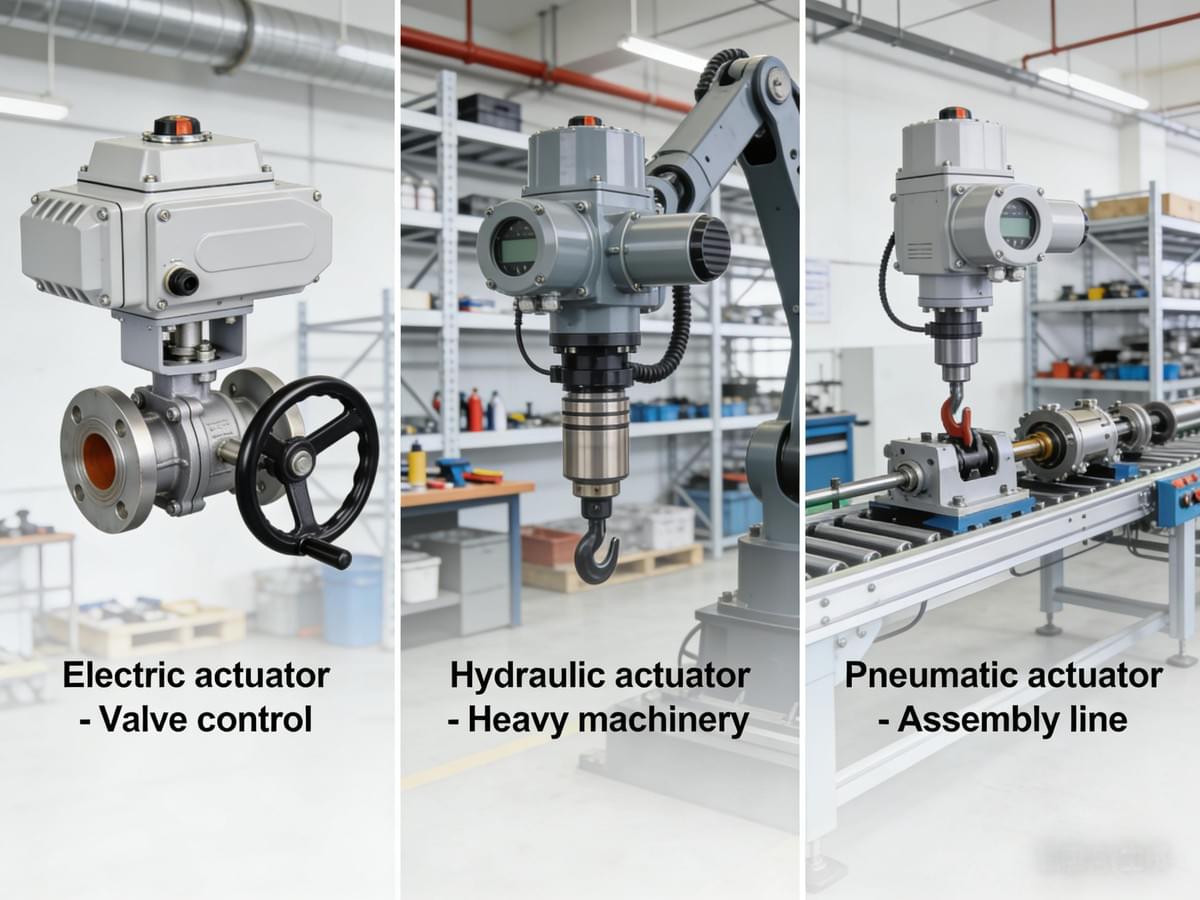
Electric actuators are the most widely adopted actuator type in industrial automation, leveraging electrical energy to deliver precise, repeatable motion for linear and rotary applications alike. From electric valve actuators regulating fluid and gas flow to motorized actuators powering robotic assembly lines, these devices offer unparalleled integration with digital control systems—making them a staple in smart manufacturing, HVAC, and water treatment projects across the Americas, Middle East, and East Asia.
A key advantage of electric actuators is their precision control, with advanced models offering millimeter-perfect positional accuracy and remote operation capabilities. They are also highly energy-efficient, consuming power only during motion, and require minimal maintenance compared to hydraulic and pneumatic alternatives—no fluid refills, leak checks, or compressed air systems needed. This reliability makes electric actuators ideal for continuous-operation industries, such as petrochemical and power generation, where unplanned downtime can lead to significant financial losses.
Haisen’s QT Series Part-Turn Valve Electric Actuator exemplifies the pinnacle of electric actuator design, engineered specifically for 90° rotation control of butterfly, ball, and plug valves. Boasting a robust, corrosion-resistant construction, high torque output, and IP-rated environmental protection, this electric actuator thrives in the harsh conditions of oil and gas refineries, marine shipyards, and food processing plants—key sectors in the Middle East’s energy industry and East Asia’s manufacturing hub. With local and remote control options, the QT Series enables real-time valve adjustment, ensuring optimal fluid flow regulation and operational safety in even the most demanding environments.
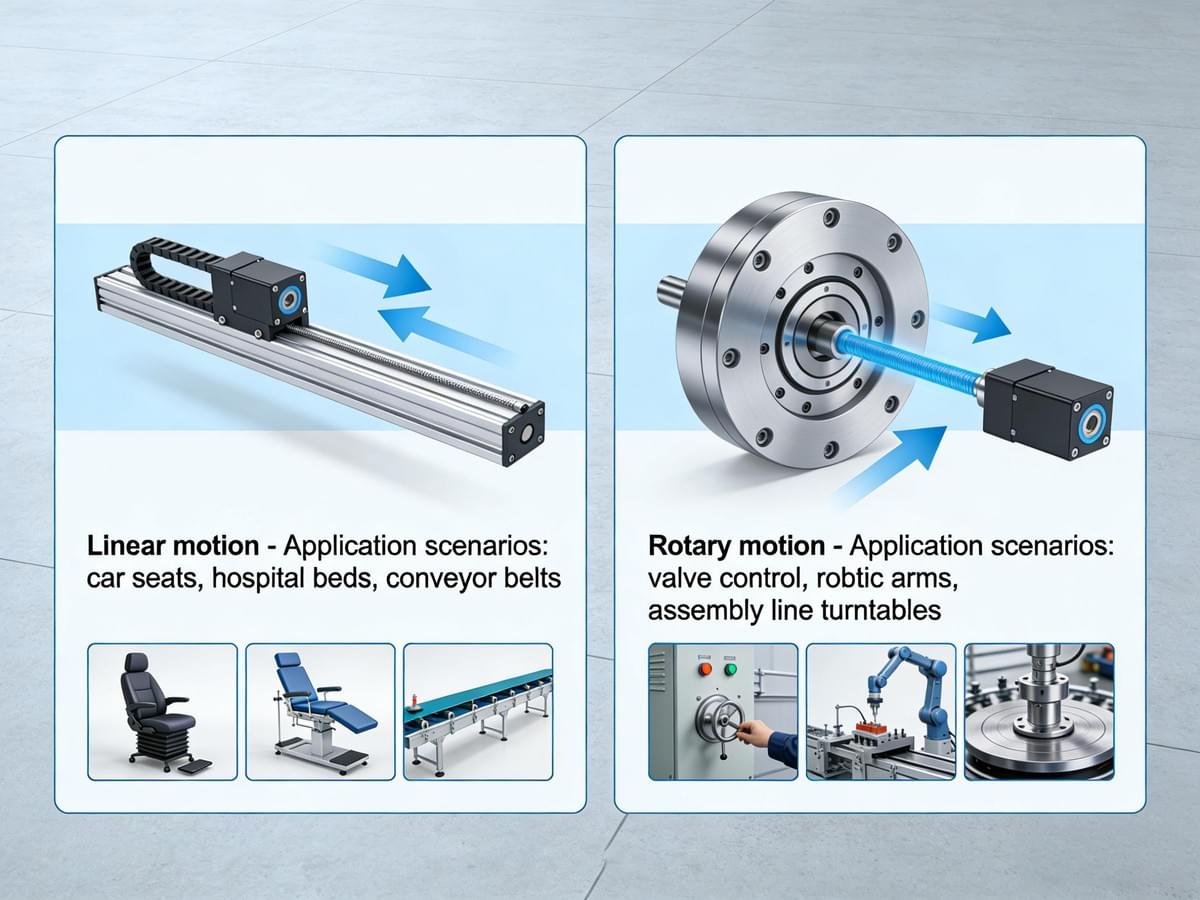
In addition to valve control, electric linear actuators are ubiquitous in automotive, medical, and aerospace industries: adjusting car seats and convertible roofs in North American auto plants, powering hospital beds and patient lifts in East Asian healthcare facilities, and deploying landing gear in aerospace systems worldwide. Electric rotary actuators, meanwhile, drive robotic arms and conveyor belts in manufacturing, delivering the high-torque, bi-directional rotation needed for efficient material handling and assembly line operations.
Hydraulic Actuators: High-Force Performance for Heavy-Duty Applications
Hydraulic actuators convert pressurized hydraulic fluid into mechanical motion, delivering unmatched force output for linear and rotary heavy-duty industrial tasks. Unlike electric actuators, which excel in precision, hydraulic actuators are engineered for high load capacity—making them the go-to choice for construction machinery, metallurgy, and large-scale manufacturing processes where extreme force is required.
A defining feature of hydraulic actuators is their power-to-weight ratio: they generate substantial force in a compact form factor, ideal for space-constrained industrial environments such as shipbuilding yards and mining operations. Hydraulic linear actuators, for example, power excavators and bulldozers in construction, while hydraulic rotary actuators control large valves and dampers in water treatment plants and power generation facilities. In the Middle East’s oil and gas sector, hydraulic actuators are used to operate heavy-duty pipeline valves, where their ability to withstand high pressure and extreme temperatures ensures reliable flow control in remote, harsh oilfields.
While hydraulic actuators offer unrivaled force, they do have tradeoffs: they require a complex network of pumps, hoses, and fluid reservoirs, increasing installation and maintenance costs. Fluid leaks are also a potential risk, which can contaminate work environments and lead to downtime—making them less suitable for clean industries such as food processing and pharmaceuticals. However, modern hydraulic actuators feature advanced sealing technologies that minimize leaks, and their durability in high-stress applications still makes them indispensable for heavy-industry operations across the globe.
Pneumatic Actuators: Speed and Affordability for Light-to-Medium Tasks
Pneumatic actuators use compressed air to generate mechanical motion, offering a cost-effective, fast-responding solution for light-to-medium industrial applications. These actuators are the most economical of the three types, with simple designs that require minimal maintenance and no fluid handling—making them a popular choice for assembly lines, packaging, and HVAC systems in the Americas, Middle East, and East Asia.
Pneumatic actuators shine in applications that demand fast, repetitive motion, such as pick-and-place operations in manufacturing and damper control in HVAC systems. Pneumatic linear actuators power conveyor belts and packaging machinery, while pneumatic rotary actuators control small valves and mechanical clamps in food processing and electronics manufacturing. In East Asia’s high-speed manufacturing hubs, pneumatic actuators are a staple of assembly lines, delivering the rapid cycle times needed for mass production of consumer goods and electronics.
A key benefit of pneumatic actuators is their clean operation: compressed air produces no harmful emissions, making them compliant with food safety and pharmaceutical industry regulations. They are also highly adaptable to harsh environments, with corrosion-resistant models available for use in chemical processing and marine applications. However, pneumatic actuators have limitations in precision and force output—air compressibility reduces positional accuracy, and they cannot match the load capacity of hydraulic actuators. For low-force, high-speed tasks, though, they offer an unbeatable combination of affordability and reliability.
Linear vs. Rotary Actuators: Matching Motion to Application
Every electric, hydraulic, and pneumatic actuator is designed to deliver either linear or rotary motion—two fundamental types of mechanical movement that define their industrial applications. Linear actuators produce straight-line motion (push/pull), while rotary actuators generate rotational motion (clockwise/counterclockwise); the choice between the two depends on the task at hand, from valve control and robotic arm movement to conveyor system operation and heavy machinery actuation.
Linear Actuators: Straight-Line Precision for Diverse Industries
Linear actuators are the workhorses of straight-line motion control, with electric, hydraulic, and pneumatic variants serving industries from automotive and aerospace to medical and manufacturing. Their ability to deliver precise, repeatable push/pull motion makes them essential for applications where positional accuracy is critical, and their compact design allows integration into tight spaces— a key advantage in modern industrial setups.
Electric linear actuators are the most versatile, used in everything from automotive seat adjustment to aerospace cargo handling systems. In North American aerospace plants, for example, electric linear actuators deploy landing gear and adjust aircraft seating, ensuring passenger safety and comfort. In East Asian medical facilities, they power hospital beds and patient lifts, enabling smooth, controlled movement for patient care. Hydraulic linear actuators, by contrast, are used for heavy-duty linear tasks such as construction machinery operation and metallurgy, where high force is required to lift and move heavy loads. Pneumatic linear actuators, meanwhile, drive light-duty applications like packaging machinery and conveyor belts, delivering fast, repetitive motion at a low cost.
Key advantages of linear actuators include high positional accuracy and consistent, repeatable motion—critical for applications such as robotic assembly lines and precision valve control. They are also easy to integrate with existing control systems, with electric models offering seamless connectivity to PLC and DCS systems for smart automation. However, linear actuators tend to be slower than rotary actuators, and their complex mechanical components may require more maintenance over time—factors to consider when selecting a linear actuator for your application.
When choosing a linear actuator, prioritize load capacity, speed requirements, and environmental conditions. For high-speed, low-force tasks (e.g., packaging), an electric or pneumatic linear actuator is ideal. For high-force, precision applications (e.g., heavy machinery), a hydraulic linear actuator is the better choice. In harsh environments—such as Middle Eastern oil refineries or East Asian chemical plants—opt for rugged, sealed linear actuators with corrosion-resistant coatings to ensure long-term reliability.
Rotary Actuators: Rotational Force for Valve Control and Robotics
Rotary actuators generate rotational motion, making them the primary choice for valve control, robotic arm operation, and any industrial task that requires bi-directional rotation or precise angular positioning. Electric, hydraulic, and pneumatic rotary actuators are all widely used, with each type tailored to specific torque, speed, and precision requirements.
Electric rotary actuators are the gold standard for precision valve control, with models like Haisen’s QT Series delivering 90° rotation accuracy for butterfly, ball, and plug valves in oil and gas, water treatment, and power generation sectors. In the Middle East’s petrochemical industry, for example, the QT Series regulates fluid flow in oil refineries, ensuring efficient production and operational safety. Electric rotary actuators also power robotic arms in manufacturing, delivering high-torque, bi-directional rotation for material handling and assembly line tasks in North American and East Asian factories.
Hydraulic rotary actuators are used for heavy-duty rotational tasks, such as controlling large pipeline valves and construction machinery attachments. Their high torque output makes them ideal for applications where extreme rotational force is required, and their compact design allows integration into space-constrained environments. Pneumatic rotary actuators, meanwhile, are used for light-duty rotational tasks like small valve control and mechanical clamp operation, offering fast response times and low maintenance costs.
Rotary actuators offer several key advantages: high torque output in a compact form factor, efficient energy consumption, and bi-directional rotation for flexible application. They are also highly durable, with modern models featuring wear-resistant components that minimize downtime in continuous-operation industries. However, rotary actuators may lack the positional precision of linear actuators, and their rotating components can experience wear over time—making regular maintenance essential for long-term performance.
A standout example of rotary actuator excellence is Haisen’s QT Series Part-Turn Valve Electric Actuator, which combines the precision of electric actuation with the high torque of rotary motion. Designed for 90° valve control, this actuator features remote operation, rugged construction, and advanced positioning technology—making it the ideal choice for oil and gas, petrochemical, and water treatment plants across the Americas, Middle East, and East Asia. Its ability to withstand extreme temperatures, moisture, and corrosion ensures reliable performance in the harshest industrial environments, while its low maintenance requirements reduce operational costs over time.
Key Considerations for Selecting the Right Actuator
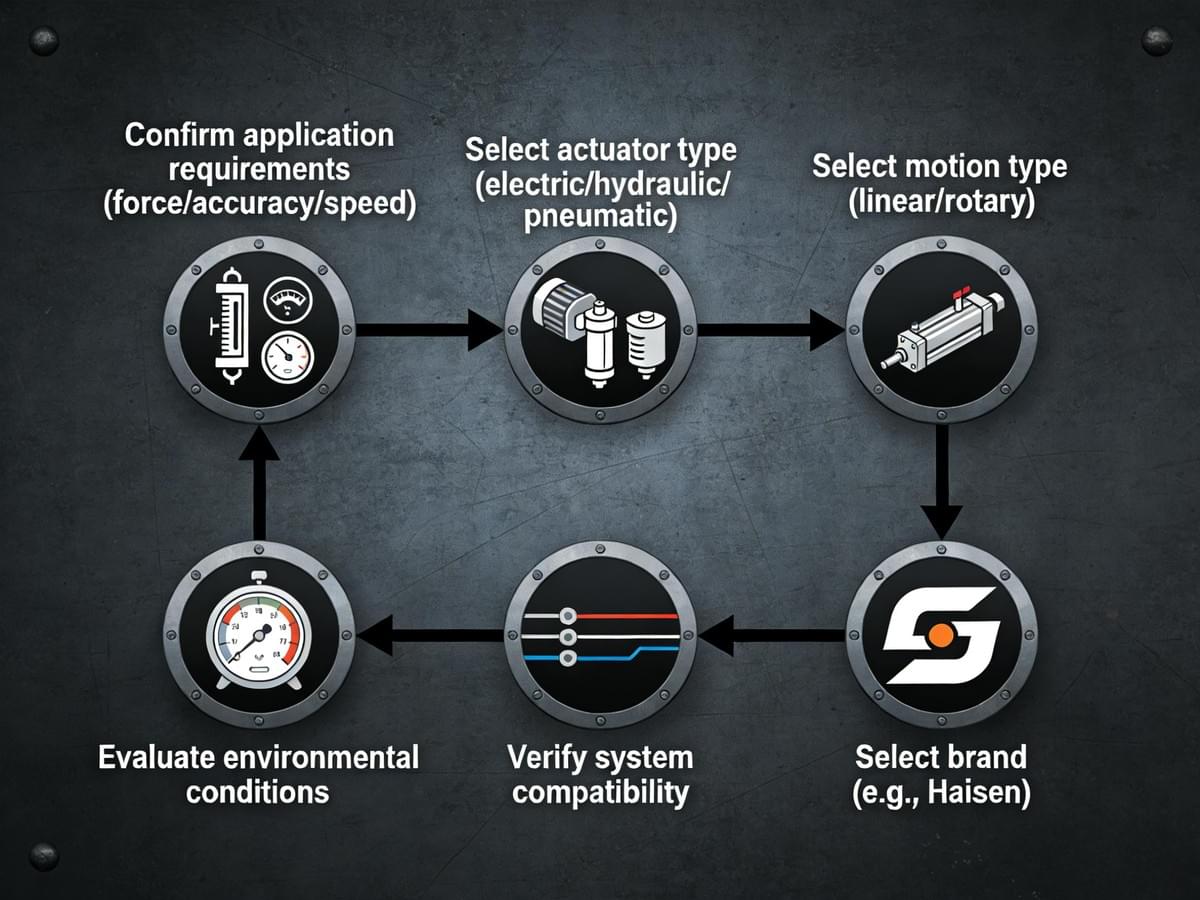
Choosing the perfect electric, hydraulic, or pneumatic actuator—and its linear or rotary variant—requires a thorough analysis of your industrial application’s unique needs. From torque and load capacity to environmental conditions and system compatibility, every factor impacts actuator performance, reliability, and cost-effectiveness. Making the wrong choice can lead to downtime, increased maintenance costs, and compromised safety—while the right actuator can optimize productivity, reduce operational expenses, and future-proof your industrial automation system for Industry 4.0.
1. Torque and Load Capacity
Torque (for rotary actuators) and load capacity (for linear actuators) are the most critical selection criteria—an actuator must generate enough force to perform the intended task without overworking or failing. Hydraulic actuators offer the highest torque/load capacity, making them ideal for heavy-duty applications like construction and metallurgy. Electric actuators deliver moderate to high torque with precise control, perfect for valve control and robotics. Pneumatic actuators offer low to moderate torque, suitable for light-duty tasks like packaging and HVAC.
For example, a Middle Eastern oil refinery requiring valve control for high-pressure pipelines would need a high-torque electric rotary actuator like Haisen’s QT Series, while a North American packaging plant would opt for a low-torque pneumatic linear actuator for conveyor belt operation.
2. Speed and Precision Requirements
Precision is non-negotiable for applications like valve control, robotics, and aerospace—electric actuators are the clear choice here, delivering millimeter-perfect positional accuracy and repeatable motion. Pneumatic actuators offer fast speed but lower precision, making them ideal for high-cycle, low-precision tasks like assembly lines. Hydraulic actuators deliver moderate speed with high force, balancing performance for heavy-duty applications.
If your application requires high-speed, low-precision motion (e.g., pick-and-place operations), a pneumatic actuator is optimal. For high-precision, moderate-speed motion (e.g., medical equipment), an electric actuator is the best fit.
3. Environmental Conditions
Industrial actuators operate in a wide range of environments—from the extreme heat and dust of Middle Eastern oilfields to the high moisture of East Asian water treatment plants and the clean rooms of North American pharmaceutical facilities. The right actuator must withstand these conditions to ensure long-term reliability.
Electric actuators like Haisen’s QT Series are engineered with rugged, sealed construction and corrosion-resistant coatings, making them suitable for harsh environments including oil and gas, petrochemical, and marine applications. Hydraulic actuators are also durable but require leak-proof seals to prevent fluid contamination in clean environments. Pneumatic actuators are ideal for clean rooms, as they produce no emissions and require minimal maintenance.
4. System Compatibility and Integration
Modern industrial automation relies on seamless integration between actuators and existing control systems (PLC, DCS, IoT platforms). Electric actuators are the most compatible, with digital control capabilities that enable remote operation, real-time monitoring, and smart automation—core features of Industry 4.0. Hydraulic and pneumatic actuators can be integrated with digital systems but require additional sensors and control modules.
When selecting an actuator, ensure it is compatible with your existing hardware and software, and look for models with plug-and-play functionality to simplify installation and reduce downtime. Haisen’s electric actuators, for example, integrate seamlessly with most industrial control systems, enabling fast deployment and easy scalability.
5. Maintenance and Operational Costs
Maintenance costs and downtime can significantly impact your bottom line—electric actuators offer the lowest maintenance requirements, with no fluid refills, leak checks, or compressed air systems needed. Pneumatic actuators require regular air filter changes and compressor maintenance, while hydraulic actuators need frequent fluid checks, seal replacements, and hose inspections.
Operational costs are also a factor: electric actuators consume power only during motion, making them highly energy-efficient. Pneumatic actuators require continuous compressed air, increasing energy usage, while hydraulic actuators have high fluid and pump maintenance costs. For long-term cost-effectiveness, electric actuators are the optimal choice for most industrial applications.
Why Haisen Actuators Are the Global Choice for Industrial Automation
When it comes to reliable, high-performance electric, linear, and rotary actuators, Haisen stands out as a leading manufacturer for the Americas, Middle East, and East Asian markets. With a focus on innovation, durability, and precision, Haisen’s actuators—including the flagship QT Series Part-Turn Valve Electric Actuator—are engineered to meet the most demanding industrial requirements, delivering unmatched performance, safety, and cost-effectiveness across oil and gas, manufacturing, water treatment, and power generation sectors.
Haisen’s QT Series is a game-changer for valve control, offering 90° rotation precision, remote operation, and high torque output in a compact, rugged design. Built to withstand extreme temperatures, moisture, and corrosion, this electric rotary actuator is ideal for the harsh environments of Middle Eastern oil refineries, East Asian chemical plants, and North American power generation facilities. Its local and remote control options enable real-time valve adjustment, ensuring optimal fluid flow regulation and operational safety, while its low maintenance requirements reduce downtime and operational costs over time.
Beyond the QT Series, Haisen’s full range of electric linear and rotary actuators are designed for seamless integration with Industry 4.0 systems, featuring advanced sensors and digital control capabilities for smart automation. Every Haisen actuator is manufactured to international quality standards, with rigorous testing to ensure reliability in even the most demanding applications. With a global network of distributors and service centers, Haisen provides fast, responsive support to customers across the Americas, Middle East, and East Asia—ensuring minimal downtime and maximum productivity for your industrial operations.
Conclusion: Actuators—The Foundation of Global Industrial Automation
Electric, hydraulic, and pneumatic actuators—and their linear and rotary variants—are the unsung heroes of modern industrial automation, powering every aspect of global manufacturing, energy production, and infrastructure development. From the oilfields of the Middle East to the manufacturing hubs of East Asia and the aerospace plants of the Americas, these devices deliver the precise, reliable motion control that defines efficient, safe, and cost-effective industrial operations.
Choosing the right actuator type is critical: electric actuators for precision and versatility, hydraulic actuators for high-force heavy-duty tasks, and pneumatic actuators for fast, affordable light-duty applications. Linear and rotary variants further tailor these actuators to unique application needs, from valve control and robotics to conveyor systems and heavy machinery operation. By prioritizing torque, precision, environmental compatibility, and system integration, you can select an actuator that optimizes your processes, reduces downtime, and future-proofs your operations for Industry 4.0.
For businesses seeking industry-leading actuator solutions, Haisen is the trusted partner—with a proven track record of delivering high-performance, durable electric linear and rotary actuators for global industrial applications. The QT Series Part-Turn Valve Electric Actuator, in particular, sets the standard for valve control precision and reliability, making it the ideal choice for oil and gas, petrochemical, and water treatment sectors worldwide.
Invest in the right actuator today, and unlock the full potential of your industrial automation system—enhancing productivity, safety, and profitability for years to come.
