Aircraft ground power units (GPU) are the cornerstone of efficient and safe aviation ground operations, delivering the critical electrical power aircraft need when stationary on the tarmac across global airports in the Americas, Middle East, and East Asia. Every modern airport, maintenance facility, and aviation service provider relies on high-quality aircraft GPU systems to keep avionics, climate control, and communication systems operational without relying on on-board engines or auxiliary power units (APU).
In the dynamic world of aviation, where downtime translates to lost revenue and compromised safety, aircraft GPU technology has evolved from basic power supplies to sophisticated, industry-compliant systems that meet the strictest global standards. Whether for commercial airliners, military aircraft, general aviation jets, or unmanned aerial vehicles (UAVs), the right aircraft GPU ensures seamless pre-flight checks, efficient maintenance, and comfortable passenger experiences while the aircraft is grounded. This comprehensive guide explores everything aviation professionals need to know about aircraft GPU—from core types and technical specifications to real-world applications, maintenance best practices, and the latest technological innovations shaping the future of ground power units for aircraft. We’ll also break down how to select the ideal aircraft GPU for your specific operational needs, ensuring maximum reliability, cost-efficiency, and sustainability for your aviation business.
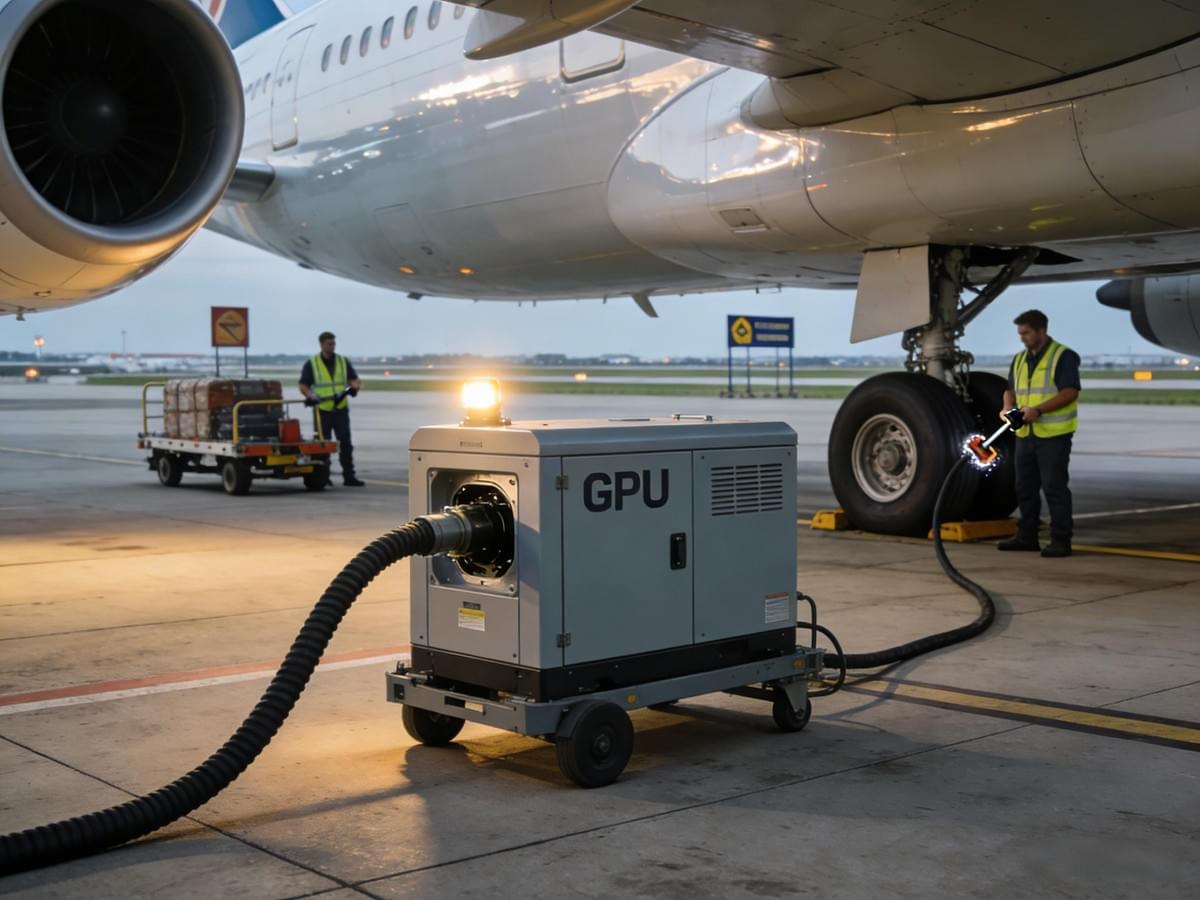
What Is an Aircraft Ground Power Unit (GPU)?
At its core, an aircraft ground power unit (GPU) is a specialized piece of ground support equipment (GSE) designed to deliver stable, clean electrical power to aircraft during all ground-based operations. Unlike an aircraft’s APU or main engines, which consume fuel and produce emissions when running on the tarmac, an aircraft GPU provides an external power source that eliminates the need for on-board power generation during parking, boarding, maintenance, and pre-flight preparation. This fundamental function makes the aircraft GPU an indispensable tool for every aviation operation, from small regional airports to international hub facilities in Dubai, Singapore, Los Angeles, and Shanghai.
Aircraft GPU systems are engineered to deliver power that meets the unique electrical requirements of aviation technology—most notably the 115V/400Hz alternating current (AC) standard for commercial aircraft and 28V direct current (DC) for smaller aircraft, military jets, and UAVs. This specialized power output ensures that sensitive avionics, navigation systems, and on-board electronics receive a ripple-free, consistent power supply, protecting delicate components from damage and ensuring accurate performance during pre-flight checks and maintenance. A high-quality aircraft GPU also features rapid load response, precise voltage and frequency regulation, and robust environmental protection, making it capable of operating in the extreme conditions common across global aviation hubs—from the high temperatures of the Middle East to the cold climates of northern East Asia and the variable weather of the Americas.
The value of an aircraft GPU extends far beyond basic power supply: it directly impacts an aviation business’s bottom line and environmental footprint. By replacing APU and engine use with an aircraft GPU, airlines and airport operators can reduce fuel consumption by up to 30% during ground operations, cutting operational costs significantly while lowering carbon emissions and noise pollution. For maintenance facilities, an aircraft GPU provides the reliable power needed for diagnostic testing, system repairs, and aircraft assembly, minimizing downtime and increasing throughput. In short, the aircraft GPU is not just a piece of equipment—it is a strategic investment in operational efficiency, sustainability, and safety for any aviation enterprise.
Key Types of Aircraft GPU: AC, DC, and Mobile vs. Stationary
Aircraft GPU systems are categorized by two primary factors: their power output type (AC or DC) and their mobility (mobile/portable or stationary/fixed). Each type of aircraft GPU is designed to meet specific operational needs, and choosing the right one depends on factors such as aircraft type, operational scale, and on-site infrastructure. Understanding the differences between these aircraft GPU variants is critical for selecting a system that aligns with your aviation business’s unique requirements.
AC Aircraft GPU is the most common type for commercial aviation, delivering the 115V/400Hz AC power required by large commercial airliners such as Boeing 737, Airbus A320, and wide-body aircraft like the Boeing 787 and Airbus A380. AC aircraft GPU systems are available in power capacities ranging from 90kVA to 180kVA and higher, with advanced models featuring brushless synchronous generators, solid-state voltage regulators, and electronic frequency control for unrivaled stability. These aircraft GPU units are often stationary, installed at airport gates or maintenance bays, and integrated with airport power infrastructure for continuous, on-demand power. For mobile operations, towable AC aircraft GPU units are available, offering flexibility for use across multiple tarmac locations or for emergency power supply. AC aircraft GPU systems comply with international standards such as MIL-STD-704F and DO-160, ensuring compatibility with global commercial and military aircraft fleets.
DC Aircraft GPU is designed for 28V DC power output, the standard for small general aviation aircraft, military jets, helicopters, and UAVs. DC aircraft GPU units deliver high peak current for engine starting—up to 2000A for 5 seconds—while providing a continuous 600A supply for on-board systems. Portable DC aircraft GPU units are the go-to choice for remote airstrips, military deployments, and small airports, as they are lightweight, maneuverable, and capable of operating in off-grid conditions. Advanced DC aircraft GPU models feature lithium-ion battery technology, replacing traditional lead-acid batteries for longer run times, faster charging, and reduced maintenance. Like their AC counterparts, DC aircraft GPU systems meet strict regulatory standards, with IP54 or higher protection ratings for dust and water resistance, ensuring reliable operation in harsh environmental conditions.
Mobile/Portable Aircraft GPU units are compact, towable, or handheld systems designed for flexibility and on-the-go power supply. These aircraft GPU models are ideal for small airports, military field operations, and maintenance teams that need to move power across the tarmac or to remote locations. Portable aircraft GPU units feature rugged construction, compact footprints, and easy-to-use controls, with some models offering multi-fuel compatibility (including DF-1, DF-2, JP-4, and JP-8) for use in regions with varying fuel availability— a critical feature for Middle Eastern and Asian aviation operations with diverse supply chains. Mobile aircraft GPU units are also a staple for emergency response teams, providing rapid power for aircraft stranded on the tarmac or for pre-flight checks in temporary locations.
Stationary/Fixed Aircraft GPU systems are large, permanent installations at airport gates, maintenance facilities, and aircraft manufacturing plants. These aircraft GPU units deliver high-capacity, continuous power for high-throughput operations, with integration capabilities for airport management systems and remote monitoring. Fixed aircraft GPU systems are the backbone of major international airports, ensuring that commercial airliners have immediate access to power upon parking, reducing boarding delays and improving passenger experience. For aircraft manufacturers, fixed aircraft GPU units provide the stable power needed for assembly and testing, streamlining production and ensuring compliance with quality standards. Many fixed aircraft GPU systems now feature smart technology, including real-time diagnostics, automated maintenance alerts, and energy efficiency tracking, making them a key component of modern, digitalized aviation operations.

Critical Technical Specifications of a Reliable Aircraft GPU
When evaluating an aircraft GPU for your aviation business, technical specifications are the most important factor to consider—they determine the unit’s compatibility, reliability, and performance in real-world operations. A high-quality aircraft GPU must meet strict industry standards for power output, regulation, environmental resistance, and safety, with specifications tailored to the unique demands of global aviation operations across the Americas, Middle East, and East Asia. Below are the core technical specifications that define a superior aircraft GPU, and why each matters for your operational success.
Power Output and Regulation are the foundation of any aircraft GPU. For AC aircraft GPU units, the standard output is 115V±3V at 400Hz±1Hz, with voltage regulation of ±1% and harmonic distortion of less than 1.0%—these metrics ensure that sensitive avionics receive clean, stable power without interference. AC aircraft GPU systems also offer overload capacity, typically 125% of rated load for 5 minutes and 150% for 30 seconds, providing flexibility for peak power demands during pre-flight checks. For DC aircraft GPU units, the standard output is 28.5V DC, with continuous current of 600A and peak starting current of up to 2000A for 5 seconds—enough to power even the most demanding military and commercial aircraft engines. DC aircraft GPU units feature precise current regulation to prevent damage to on-board batteries and electrical systems, a critical feature for maintenance and starting operations.
Environmental Resistance is non-negotiable for an aircraft GPU, which must operate in extreme temperatures, high humidity, dust, and rain across global aviation hubs. The best aircraft GPU systems offer a wide operating temperature range of -40℃ to +55℃ (-40°F to +131°F), with specialized cooling systems (air-cooled or liquid-cooled) for high-temperature environments in the Middle East and Southeast Asia. Aircraft GPU units also feature a minimum IP54 protection rating, with some models offering IP65 or higher for complete dust and water resistance, ensuring reliable operation in rainy conditions common in East Asia and coastal American airports. Additionally, aircraft GPU systems are engineered to operate at high altitudes—up to 10,000 feet—making them suitable for mountainous airports in the Americas and Asia.
Noise and Emission Levels are key considerations for modern aviation operations, which prioritize sustainability and compliance with local environmental regulations. A high-performance aircraft GPU features low noise emission (≤65dB), meeting airport noise limits and reducing disruption to passengers and ground crew. For diesel-powered aircraft GPU units, advanced models meet EPA Tier III and international emission standards, with low-emission engines and multi-fuel compatibility to reduce carbon footprint. The latest innovation in aircraft GPU technology is emission-free lithium-ion battery-powered units, which eliminate fuel consumption and emissions entirely—an ideal solution for airports targeting net-zero carbon goals, such as Changi Airport (Singapore) and Los Angeles International Airport (LAX).
Physical and Operational Features of an aircraft GPU impact its usability and integration with your existing operations. Mobile aircraft GPU units feature a compact, narrow profile for easy air transport and forklift compatibility, with lift-off doors for full access to internal components—simplifying maintenance and reducing downtime. Stationary aircraft GPU units are designed for permanent installation, with robust mounting systems and integration with airport power grids for continuous supply. Both mobile and stationary aircraft GPU systems feature intuitive user interfaces, including high-definition touchscreens and digital diagnostic displays, making them easy to operate for ground crew across different regions and language backgrounds. Advanced aircraft GPU units also offer remote monitoring and control capabilities, allowing maintenance teams to track performance, receive real-time alerts, and troubleshoot issues from a central location— a game-changer for large airport operations with multiple GPU units across the tarmac.
Safety and Compliance are non-negotiable for any aircraft GPU, which must meet global aviation standards to ensure compatibility and safe operation. The top aircraft GPU systems comply with MIL-STD-704F (military aviation power standards), DO-160 (avionics environmental testing), and GJB (Chinese national military standards), as well as local regulations in the Americas (FAA), Middle East (GCAA), and East Asia (CAAC). These compliance standards ensure that the aircraft GPU is compatible with global aircraft fleets and meets the strictest safety requirements for electrical and mechanical performance. Aircraft GPU units also feature built-in safety protections, including under-voltage/over-voltage alarms, under-frequency/over-frequency shutdown, and short-circuit protection, preventing damage to the unit and the aircraft’s electrical systems.
Real-World Applications of Aircraft GPU Across the Aviation Industry
The versatility of the aircraft GPU makes it a vital tool across every segment of the aviation industry, from commercial airlines and international airports to military aviation, aircraft maintenance, and manufacturing. In every application, the aircraft GPU delivers tangible benefits—reduced costs, improved efficiency, lower emissions, and enhanced safety—making it a universal investment for aviation businesses of all sizes. Below are the key real-world applications of aircraft GPU, and how it transforms operations in each sector, with a focus on use cases relevant to the Americas, Middle East, and East Asia.
Commercial Airport Operations are the most common application for aircraft GPU systems, where they power commercial airliners during parking, boarding, and pre-flight preparation. At major international hubs such as Dubai International Airport (DXB), Hong Kong International Airport (HKG), and Miami International Airport (MIA), stationary aircraft GPU units are installed at every gate, providing immediate power to aircraft upon arrival. This eliminates the need for pilots to run the APU during boarding, reducing fuel consumption and noise pollution in terminal areas— a critical benefit for passenger comfort and environmental compliance. For regional airports with limited infrastructure, portable aircraft GPU units offer a flexible, cost-effective solution, allowing them to support commercial and general aviation aircraft without permanent power installations. In the Middle East, where high temperatures place extra demand on aircraft climate control systems, high-capacity aircraft GPU units ensure that on-board AC remains operational during boarding, preventing passenger discomfort and improving travel experience.
Military Aviation and Field Operations rely on rugged, portable aircraft GPU units to deliver power in remote, off-grid locations. Military aircraft GPU systems are engineered to meet the strict demands of field deployment, with multi-fuel compatibility, extreme environmental resistance, and rapid deployment capabilities. For military bases in the Middle East and Asia, portable DC aircraft GPU units provide the high peak current needed to start fighter jets and transport aircraft, while stationary AC aircraft GPU units power maintenance facilities and base operations. Military aircraft GPU systems also comply with strict security and reliability standards, ensuring that power is available 24/7 for critical missions— even in the harshest conditions.
Aircraft Maintenance, Repair, and Overhaul (MRO) facilities depend on aircraft GPU systems for reliable power during diagnostic testing, repairs, and system upgrades. A stable aircraft GPU supply is essential for accurate testing of avionics, navigation systems, and on-board electronics, as inconsistent power can lead to false test results and extended downtime. MRO facilities across the Americas, Middle East, and East Asia use a combination of stationary and portable aircraft GPU units to support multiple aircraft simultaneously, with high-capacity AC units for commercial airliners and compact DC units for small aircraft and UAVs. By using an aircraft GPU for maintenance, MRO providers can reduce turnaround times by up to 15%, increasing throughput and revenue while ensuring the highest quality of repairs.
Aircraft Manufacturing and Assembly facilities use fixed aircraft GPU systems to power aircraft during the production process, from component testing to final assembly. Aircraft GPU units provide the clean, stable power needed to test avionics, lighting, and communication systems in new aircraft, ensuring compliance with quality and safety standards before delivery. For major aircraft manufacturers such as Boeing (USA) and COMAC (China), aircraft GPU systems are integrated into production lines, streamlining assembly and reducing the risk of delays. The precision power delivery of aircraft GPU units also protects delicate new components from damage, ensuring that aircraft meet performance specifications upon delivery to customers.
General Aviation and UAV Operations use compact, portable DC aircraft GPU units for power and starting needs. Small airports, private jet facilities, and UAV operators in the Americas, Middle East, and East Asia rely on portable aircraft GPU units for their flexibility and ease of use, as they can be moved to any location on the tarmac and operated by a single crew member. For UAV operations— a rapidly growing sector in Asia and the Middle East— lightweight DC aircraft GPU units provide the precise power needed to test and launch unmanned aircraft, ensuring reliable performance for commercial, military, and surveillance missions.
How to Select the Right Aircraft GPU for Your Business
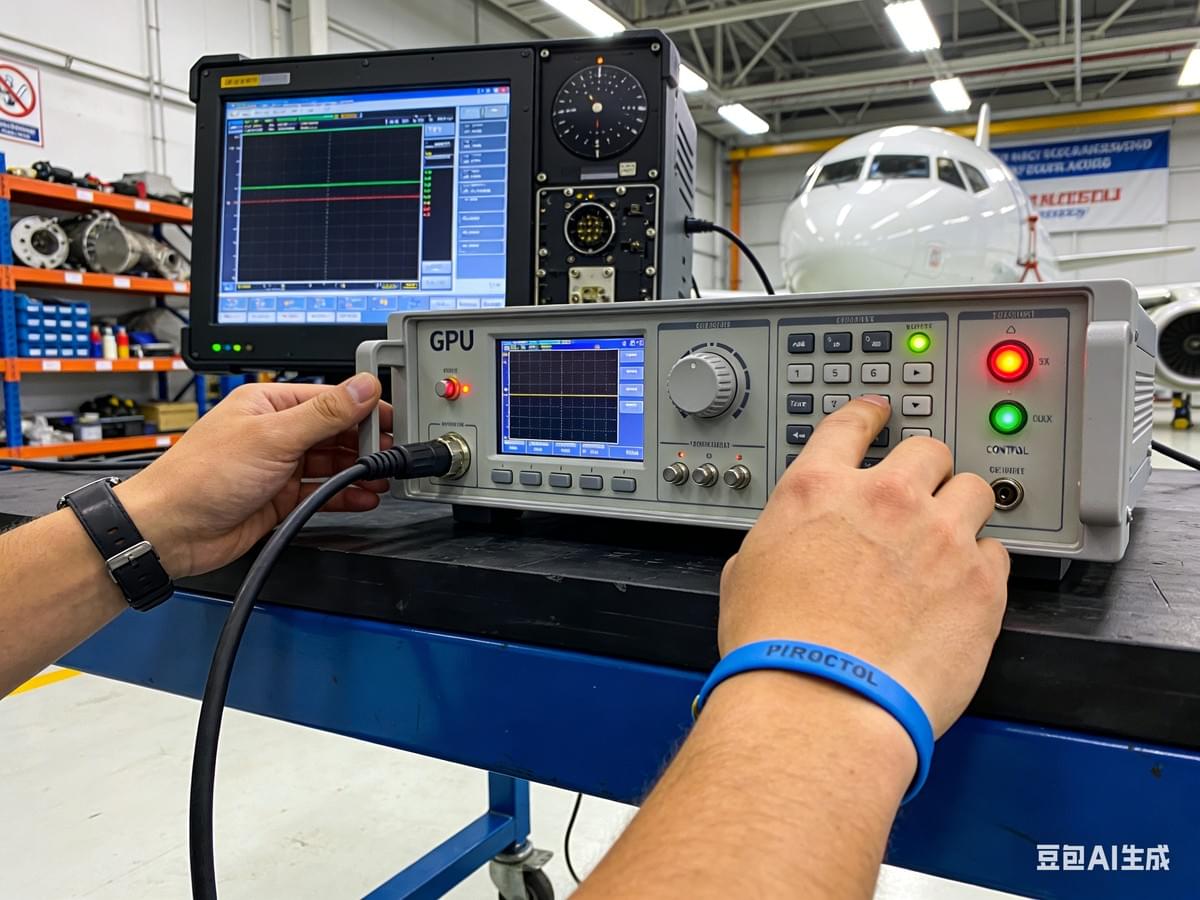
Choosing the ideal aircraft GPU for your aviation operation is a critical decision that impacts efficiency, cost, and safety for years to come. With a wide range of aircraft GPU models available— from portable DC units to high-capacity stationary AC systems— it’s essential to evaluate your specific needs, operational scale, and long-term goals before making a purchase. Below is a step-by-step guide to selecting the right aircraft GPU, with key considerations for aviation businesses in the Americas, Middle East, and East Asia.
Step 1: Identify Your Aircraft Fleet and Power Requirements
The first step in selecting an aircraft GPU is to match the unit’s power output to your aircraft fleet’s electrical requirements. Commercial airliners require 115V/400Hz AC aircraft GPU units, while small general aviation aircraft, military jets, and UAVs need 28V DC aircraft GPU systems. Consider the maximum power capacity your fleet needs— for example, wide-body aircraft require 180kVA AC aircraft GPU units, while narrow-body jets can operate with 90kVA or 120kVA units. If your fleet includes a mix of aircraft types, look for multi-functional aircraft GPU units that can deliver both AC and DC power, offering flexibility and reducing the need for multiple systems.
Step 2: Evaluate Your Operational Mobility Needs
Determine whether you need a mobile/portable or stationary/fixed aircraft GPU based on your operational layout. If you operate a small airport, remote airstrip, or military field operation, a portable aircraft GPU unit is the best choice— it offers flexibility and can be moved to any location on the tarmac. For large airports, MRO facilities, and manufacturing plants with fixed operations, a stationary aircraft GPU system provides continuous, high-capacity power and integration with existing infrastructure. If your operation requires both fixed and mobile power, consider a mixed fleet of aircraft GPU units to cover all scenarios.
Step 3: Consider Environmental and Regional Operating Conditions
The aircraft GPU you select must be capable of operating in the environmental conditions of your region. For Middle Eastern and Southeast Asian operations, choose an aircraft GPU with a wide high-temperature range (+55℃ or higher) and advanced cooling systems to handle extreme heat. For northern East Asian and North American operations, prioritize an aircraft GPU with low-temperature performance (-40℃) and cold-start capabilities. If your operation is in a coastal or rainy region, select an aircraft GPU with a high IP protection rating (IP54 or higher) for dust and water resistance. For remote operations in the Americas or Asia, look for aircraft GPU units with multi-fuel compatibility to ensure fuel availability in off-grid locations.
Step 4: Prioritize Sustainability and Emission Goals
As aviation worldwide moves toward net-zero carbon emissions, sustainability is a key consideration for aircraft GPU selection. If your business has environmental goals, choose an emission-free lithium-ion battery-powered aircraft GPU unit to eliminate fuel consumption and emissions. For diesel-powered aircraft GPU units, select models that meet EPA Tier III or higher emission standards to reduce your carbon footprint. Additionally, look for aircraft GPU systems with high energy conversion efficiency— this reduces power waste and lowers operational costs over time.
Step 5: Evaluate Maintenance and Support Capabilities
A reliable aircraft GPU is only as good as the maintenance and support behind it. Choose an aircraft GPU manufacturer that offers global service and support, with spare parts availability in your region— critical for operations in the Americas, Middle East, and East Asia. Look for aircraft GPU units with modular design, which simplifies maintenance and reduces downtime by allowing easy replacement of components. Advanced aircraft GPU models with real-time diagnostic and remote monitoring capabilities also reduce maintenance costs by enabling predictive maintenance and rapid troubleshooting.
Step 6: Ensure Compliance with Global and Local Standards
Always select an aircraft GPU that complies with global aviation standards (MIL-STD-704F, DO-160) and local regulatory requirements (FAA in the Americas, GCAA in the Middle East, CAAC in East Asia). Compliance ensures that the aircraft GPU is compatible with your aircraft fleet and meets the strictest safety and performance standards. Non-compliant aircraft GPU units can lead to equipment damage, safety hazards, and regulatory penalties— making compliance a non-negotiable factor in your selection.
The Future of Aircraft GPU: Smart, Sustainable, and Connected
The aircraft GPU industry is evolving rapidly, driven by global aviation’s push for digitalization, sustainability, and operational efficiency. As airports and aviation businesses across the Americas, Middle East, and East Asia invest in modern ground support systems, the next generation of aircraft GPU technology is set to redefine what’s possible for ground power operations. Below are the key trends shaping the future of aircraft GPU, and how they will benefit aviation businesses in the years to come.
Smart and Connected Aircraft GPU Systems are at the forefront of innovation, with integration into airport management systems, IoT (Internet of Things) platforms, and cloud-based monitoring. Future aircraft GPU units will feature AI-powered diagnostics, which can predict maintenance needs and identify potential issues before they cause downtime— reducing maintenance costs and improving reliability. Remote control and monitoring capabilities will also become standard, allowing airport operators to manage all aircraft GPU units from a single central location, regardless of their physical position on the tarmac. This connectivity will streamline operations for large airports, reducing the need for on-site crew and improving overall efficiency.
Sustainable and Emission-Free Aircraft GPU Technology will continue to grow in popularity, with lithium-ion battery-powered units and hybrid systems replacing traditional diesel-powered models. Emission-free aircraft GPU units eliminate fuel consumption and carbon emissions entirely, aligning with global aviation’s net-zero goals and local environmental regulations. Hybrid aircraft GPU systems— which combine diesel engines with battery storage— will offer the best of both worlds: the flexibility of diesel power for remote operations and the sustainability of battery power for gate operations. Additionally, aircraft GPU units will be integrated with renewable energy sources such as solar and wind power at airports, creating a fully sustainable ground power ecosystem.
Lightweight and Compact Aircraft GPU Design will make portable units more maneuverable and efficient, with advanced materials reducing weight without compromising performance. For military and remote operations, this means easier deployment and transport of aircraft GPU units, while for small airports, it means more flexibility and less storage space required. Compact aircraft GPU units will also feature higher power density, delivering more power in a smaller footprint— a critical feature for busy airport tarmacs with limited space.
Universal Compatibility and Standardization will simplify aircraft GPU selection and operation for aviation businesses with mixed fleets. Future aircraft GPU units will be designed to deliver both AC and DC power with adjustable voltage and frequency, making them compatible with all aircraft types— from commercial airliners to UAVs. This universal compatibility will reduce the need for multiple aircraft GPU units, cutting costs and streamlining operations for airports and MRO facilities. Additionally, global standardization of aircraft GPU connectors and power output will make cross-border operations easier, benefiting international airlines and aviation service providers operating across the Americas, Middle East, and East Asia.
Why Investing in a High-Quality Aircraft GPU Is a Strategic Decision
For any aviation business— whether an airport, airline, MRO facility, or military operation— investing in a high-quality aircraft GPU is not just a purchase, but a strategic decision that drives long-term success. A reliable aircraft GPU delivers immediate and lasting benefits, from reduced operational costs and lower emissions to improved efficiency and enhanced safety. In the competitive global aviation industry, where every minute of downtime and every dollar of cost matters, the aircraft GPU is a tool that delivers measurable returns on investment (ROI) for years to come.
The cost savings from an aircraft GPU are significant: by reducing fuel consumption by up to 30% during ground operations, airlines and airports can cut millions in fuel costs annually. Additionally, the reduced wear and tear on aircraft APUs and engines from less use extends their lifespan, reducing maintenance and replacement costs for aviation fleets. For MRO facilities, the improved throughput and reduced downtime from a reliable aircraft GPU translate to more aircraft serviced and higher revenue. The environmental benefits of an aircraft GPU also translate to cost savings, as many regions offer tax incentives and regulatory benefits for businesses that reduce their carbon footprint— a key advantage for operations in the Americas, Middle East, and East Asia, where environmental regulations are becoming increasingly strict.
Beyond cost savings, the aircraft GPU is a critical tool for improving safety and compliance in aviation operations. The clean, stable power delivered by a high-quality aircraft GPU protects sensitive avionics and electrical systems from damage, reducing the risk of in-flight malfunctions and safety hazards. Compliance with global aviation standards also ensures that your operation meets regulatory requirements, avoiding penalties and reputational damage. For passenger-facing operations, the aircraft GPU improves the travel experience by ensuring that on-board climate control, lighting, and entertainment systems are operational during boarding— increasing passenger satisfaction and loyalty.
In a global aviation industry that is constantly evolving, the aircraft GPU remains a constant: a fundamental tool that powers safe, efficient, and sustainable ground operations. Whether you operate a small regional airport in the Americas, a major international hub in the Middle East, or an MRO facility in East Asia, the right aircraft GPU is an investment in the future of your business— one that delivers value, reliability, and performance for years to come.