Air traffic management (ATM) is the backbone of global aviation, powering safe, efficient aircraft movement across every continent as air travel demand surges to unprecedented levels. Advanced technologies like satellite navigation, ADS-B, and AI are redefining air traffic management, solving modern aviation’s biggest challenges from congestion to cross-border coordination. In an industry where 40 million commercial flights took to the skies globally in 2023 alone, robust air traffic management is no longer a luxury—it is a necessity to keep skies orderly, passengers safe, and aviation economically viable.
Air traffic management is far more than directing flights from takeoff to landing; it is a holistic ecosystem uniting air traffic control (ATC), flight information services (FIS), and airspace management, all working in tandem to maximize airspace capacity, minimize delays, and eliminate collision risks. Every component of air traffic management is interdependent: ATC professionals rely on real-time data from FIS to guide aircraft, while airspace management ensures that civilian, commercial, and military traffic coexist without conflict. For airlines, effective air traffic management directly cuts fuel costs, boosts on-time performance, and strengthens market competitiveness—delays caused by poor air traffic management can lead to millions in lost revenue for carriers and ripple effects across tourism, logistics, and other aviation-linked industries.
The Core Pillars of Effective Air Traffic Management
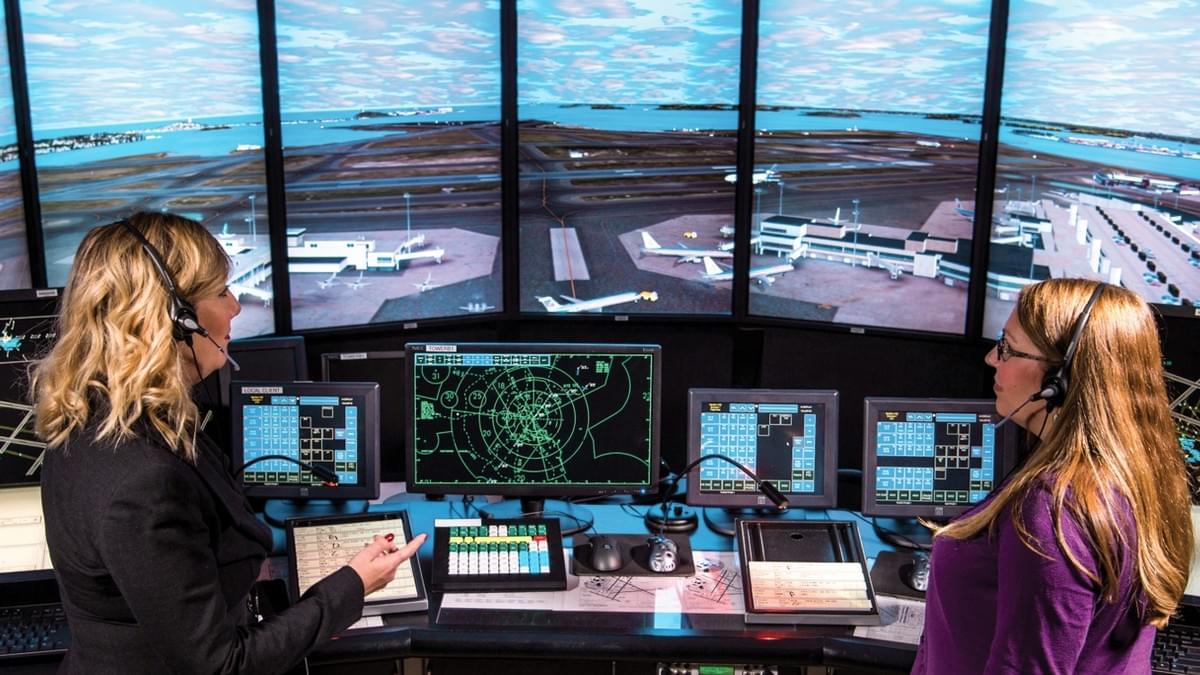
At the heart of every reliable air traffic management system lie three non-negotiable components, each engineered to address specific layers of aviation operation. Air Traffic Control (ATC) is the most visible face of air traffic management, with controllers at terminal and en-route centers overseeing every phase of flight. Terminal control centers manage takeoff, landing, and low-altitude navigation, while en-route centers guide aircraft along established airways during cruise—both rely on primary and secondary radar (SSR) to track aircraft position, altitude, and speed with pinpoint accuracy. Primary radar detects aircraft via radio wave reflection, while secondary radar retrieves critical data like aircraft ID and altitude from on-board transponders, forming the foundation of air traffic management’s situational awareness.
Flight Information Services (FIS) are the information backbone of air traffic management, delivering real-time weather updates, aeronautical data, and hazard alerts to pilots before, during, and after flights. Adverse weather—thunderstorms, fog, strong winds—remains one of the top causes of flight disruptions, and FIS ensures pilots have the data to adjust routes proactively. This service is not just a convenience; it is a critical safety layer of air traffic management, preventing avoidable diversions and ensuring flights stay on course even in unpredictable conditions. FIS officers curate and disseminate hyper-local, up-to-date information, making them an unsung yet essential part of the air traffic management ecosystem.
Airspace Management completes the triad of core air traffic management components, focusing on the strategic planning and allocation of airspace resources. Airspace is divided into classes (from restricted Class A for high-altitude IFR traffic to flexible Class G for general aviation) with tailored operating rules, and effective airspace management balances commercial flight demand with military operations, special events, and environmental considerations. By defining clear airways and flight corridors, airspace management eliminates congestion hotspots and ensures that air traffic management systems operate at maximum efficiency—even as the number of flights continues to rise year over year.
Transforming Air Traffic Management with Emerging Technologies
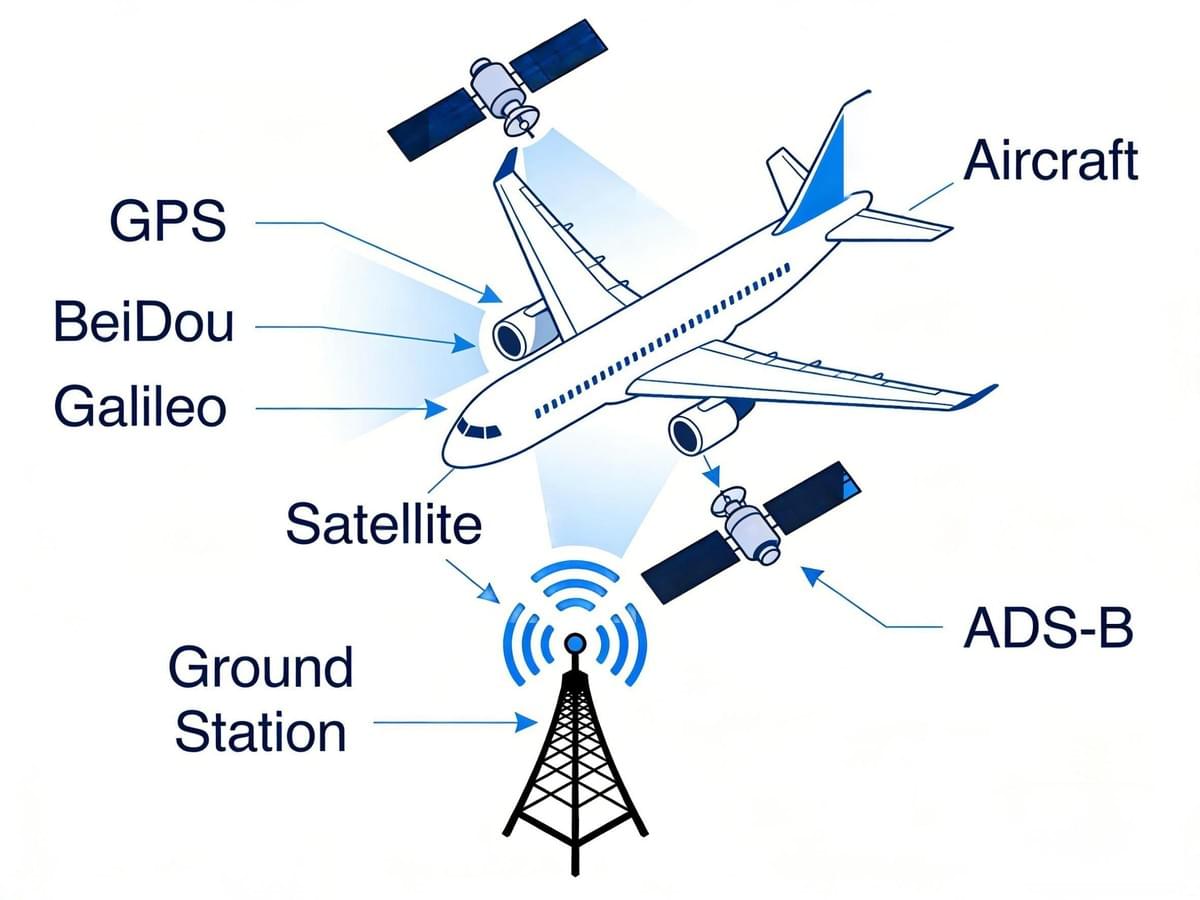
The future of air traffic management is driven by cutting-edge technologies that are replacing outdated ground-based systems with more accurate, flexible, and global solutions—each designed to address the unique challenges of modern aviation. Satellite-based navigation systems are the cornerstone of next-generation air traffic management, with GPS, GLONASS, Galileo, and BeiDou revolutionizing how aircraft determine their position and route. Unlike traditional navigation tools, these satellite systems use trilateration to deliver precise positioning (3-5 meters for civilian GPS) across every corner of the globe, enabling direct flight paths and eliminating the need for fixed airways. For long-haul carriers, adopting GPS-based RNAV and RNP procedures as part of their air traffic management strategy has led to 8-10% fuel savings— a game-changer for both profitability and sustainability.
Galileo, Europe’s satellite navigation system, adds a critical security layer to air traffic management with its Open Service Navigation Message Authentication (OS-NMA), protecting against spoofing and jamming attacks that threaten satellite data integrity. BeiDou, China’s rapidly expanding system, is set to become a key player in Asia-Pacific air traffic management, enabling precise approach procedures at airports in complex terrain where traditional navigation struggles. Together, these satellite systems are making air traffic management more global, reducing reliance on regional ground infrastructure and ensuring seamless navigation even over remote oceans and unpopulated landmasses.
Automatic Dependent Surveillance-Broadcast (ADS-B) is another transformative technology for air traffic management, shifting from radar-based detection to aircraft self-reporting for real-time tracking. ADS-B Out-equipped aircraft transmit position, altitude, speed, and heading every 0.5-1 second via 1090 MHz ES or 978 MHz UAT frequencies, feeding data to air traffic controllers, other aircraft, and ground systems—creating a fully transparent air traffic management environment. In terminal areas, ADS-B has increased runway throughput by up to 20% at major airports, as controllers can maintain more precise spacing between approaching aircraft. ADS-B In takes air traffic management a step further, giving pilots in-cockpit access to nearby traffic and real-time weather data, even in areas with limited radar coverage. This enhanced situational awareness reduces human error and makes air traffic management more resilient, ensuring pilots and controllers share a single, accurate view of the skies.
Unmanned Aerial Systems (UAS) integration is one of the most pressing priorities for modern air traffic management, as drones become ubiquitous for aerial photography, package delivery, emergency response, and commercial operations. The challenge for air traffic management is to integrate UAS safely into existing airspace without disrupting manned flight—and detect-and-avoid (DAA) systems are the solution. DAA systems for drones use radar, lidar, cameras, and infrared sensors to identify nearby aircraft, with advanced algorithms triggering avoidance maneuvers (like automatic emergency descent) to prevent collisions. Air traffic management teams are also establishing dedicated UAS corridors (typically below 400 feet) to separate drone and manned traffic, while remote identification technology ensures authorities can track a drone’s operator, location, and flight intentions—critical for air traffic management security in urban areas and near sensitive sites like airports and government buildings.
Artificial intelligence (AI) and data-driven decision-making are elevating air traffic management from reactive to proactive, turning vast amounts of aviation data into actionable insights. Air traffic management generates an enormous volume of data—flight plans, radar readings, weather data, aircraft performance metrics, and historical traffic patterns—and AI algorithms analyze this data to predict congestion, identify risk, and optimize operations. Machine learning models can forecast peak traffic hours at airports, predict delay likelihood on specific routes, and measure weather’s impact on flight operations, allowing air traffic management teams to adjust schedules, allocate resources, and reroute flights before congestion occurs.
AI also revolutionizes real-time conflict detection and resolution in air traffic management, continuously analyzing aircraft position, speed, and heading to predict potential collisions well in advance. These algorithms factor in aircraft performance, airspace restrictions, and weather to suggest optimal avoidance maneuvers, reducing the burden on ATC controllers and minimizing human error. Natural Language Processing (NLP) further enhances air traffic management by improving communication between controllers and pilots: NLP analyzes voice transcripts to identify misunderstandings, clarify instructions, and even train new controllers—ensuring that the human element of air traffic management is as efficient and error-free as the technological one. Together, AI and data are making air traffic management smarter, more efficient, and better equipped to handle the growing demands of global aviation.
Overcoming the Biggest Challenges in Modern Air Traffic Management
Despite technological advancements, air traffic management faces three persistent challenges that threaten to limit aviation growth—capacity constraints, international coordination, and safety/security risks—and addressing them requires a mix of technology, investment, and global collaboration. Capacity constraints are the most immediate challenge for air traffic management: air traffic growth has outpaced infrastructure development in major regions, with takeoff/landing slot demand exceeding supply in London, New York, Tokyo, and other global hubs. While satellite navigation and ADS-B are boosting the capacity of existing air traffic management systems by enabling more precise traffic control, long-term solutions require significant investment in new infrastructure—new runways, expanded control centers, and upgraded air traffic management technology to match flight demand.
International coordination is a fundamental challenge for air traffic management, a global industry where cross-border flights rely on seamless integration of national systems. Every country has its own air traffic management regulations, radar systems, communication frequencies, and flight plan formats—differences that create inefficiencies and safety risks for international flights. The International Civil Aviation Organization (ICAO) plays a critical role in standardizing air traffic management practices, but full harmonization remains elusive. For air traffic management to truly operate on a global scale, countries must align their systems, adopt common technical standards, and create cross-border air traffic management partnerships—ensuring that a flight from Dubai to Los Angeles or Singapore to London experiences no disruptions from incompatible air traffic management protocols.
Safety and security are non-negotiable for air traffic management, and new threats are emerging as the industry becomes more digital. Cybersecurity is the biggest concern: air traffic management systems—from satellite navigation to ATC radar and communication networks—are prime targets for hackers, who could disrupt operations, alter flight data, or endanger aircraft. To protect air traffic management systems, the industry must implement robust cybersecurity measures: end-to-end encryption, intrusion detection systems, regular security audits, and employee training to prevent human error. Physical security also remains critical for air traffic management, with restricted access to control centers, radar facilities, and satellite ground stations—ensuring that both digital and physical layers of air traffic management are protected from threats.
Haisen’s Custom Air Traffic Management Solutions: Engineering the Future of Aviation
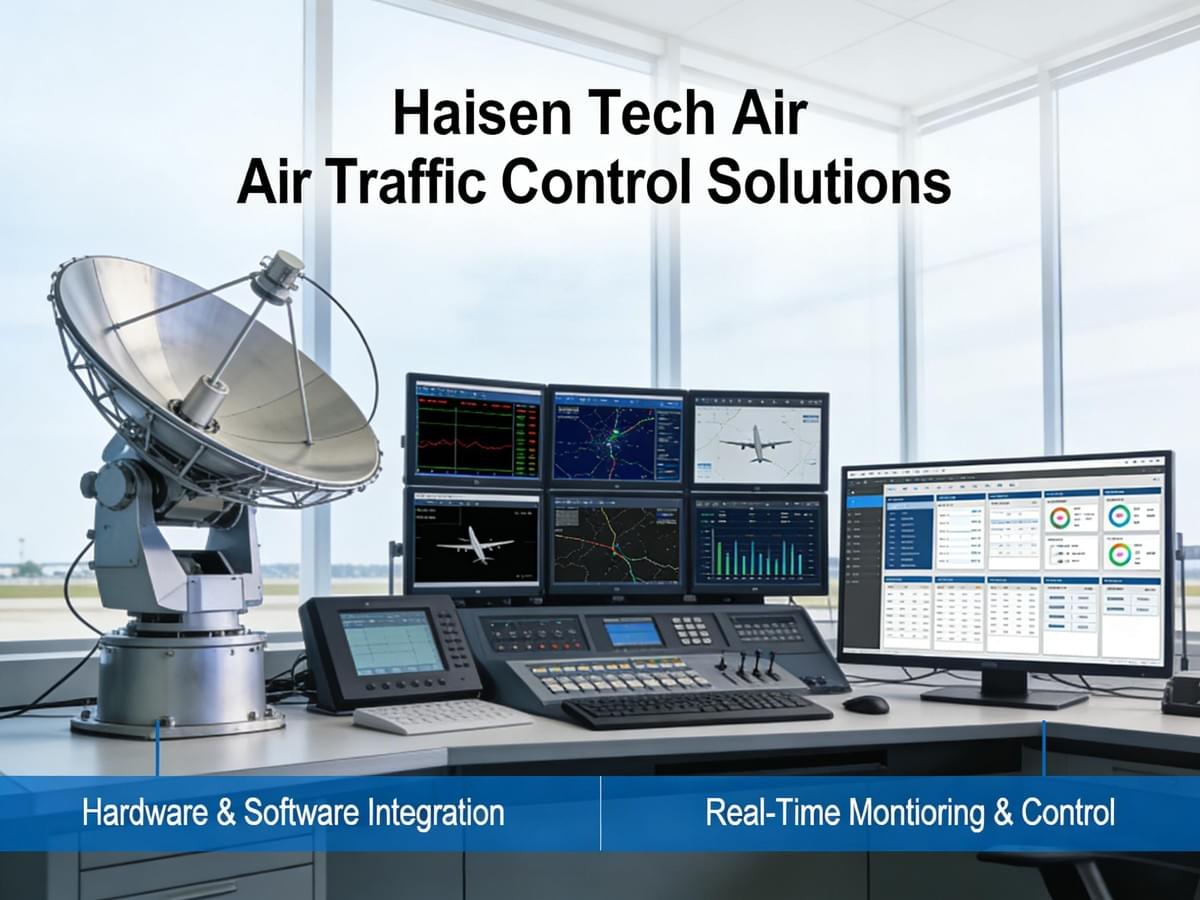
At Hong Kong Haisen Technology Co., Ltd., we specialize in developing cutting-edge air traffic management solutions that address the industry’s most pressing challenges—boosting efficiency, enhancing safety, and increasing airspace capacity for airports, airlines, and aviation authorities worldwide. Our air traffic management products and services are engineered to integrate seamlessly with existing systems, leveraging the latest technologies to create future-ready air traffic management ecosystems that scale with growing flight demand.
Our Advanced Radar Systems are the gold standard for air traffic management detection and tracking, with state-of-the-art primary and secondary radar equipped with clutter suppression and target identification algorithms. These radar systems deliver high-resolution images and accurate real-time data, even in adverse weather (fog, rain, thunderstorms) and complex airspace environments—ensuring air traffic management controllers have a clear, comprehensive view of the skies for both terminal and en-route operations. Whether managing a busy international airport or a remote en-route center, our radar systems form the backbone of reliable air traffic management.
Our Integrated Communication and Surveillance Solutions unify the latest communication technologies with advanced surveillance tools to create a seamless air traffic management experience. Featuring digital voice communication, real-time data link capabilities, and full ADS-B integration, our systems ensure that information flows accurately and instantly between air traffic management controllers, pilots, and ground stakeholders. This integrated approach eliminates communication gaps, reduces human error, and enhances situational awareness—core goals of effective air traffic management. For cross-border operations, our solutions align with global ICAO standards, making international air traffic management coordination simpler and more efficient.
Our Airspace Management Software is a comprehensive platform for strategic air traffic management, enabling airspace managers to define airways, establish flight corridors, and allocate capacity based on traffic type (commercial, general aviation, UAS, military). Equipped with real-time traffic monitoring, AI-powered conflict detection and resolution, and scenario planning tools, our software optimizes airspace utilization and ensures that air traffic management operations run at maximum efficiency. The software is fully customizable, adapting to the unique needs of every airport or aviation authority—from small regional hubs to global mega-airports with thousands of daily flights.
We believe that great air traffic management technology is only as effective as the professionals who operate it, which is why we offer comprehensive Training and Support Services for air traffic management controllers, airspace managers, and technical staff. Our training programs are updated regularly to reflect the latest air traffic management technologies and industry best practices, covering everything from radar operation and ADS-B integration to AI-driven data analysis and cybersecurity. Our ongoing technical support ensures that your air traffic management systems operate smoothly 24/7, with rapid response times and expert troubleshooting to minimize downtime. For us, air traffic management is a partnership—we stand with our customers every step of the way to ensure their skies are safe, efficient, and future-ready.
The Future of Air Traffic Management: A Global, Connected Vision
The future of air traffic management is global, connected, and technology-driven—with satellite navigation, ADS-B, AI, and UAS integration at its core. As air travel demand continues to soar, air traffic management will evolve from a regional system to a fully global ecosystem, where flights are guided by seamless, cross-border technology and data-driven decision-making. Sustainability will also become a central focus of air traffic management, with technologies like satellite-based route optimization reducing fuel consumption and carbon emissions—aligning aviation with global climate goals.
For airports, airlines, and aviation authorities, investing in modern air traffic management is not just a business decision; it is a strategic imperative. The right air traffic management solutions boost safety, cut costs, improve on-time performance, and enable growth—all critical in an industry where competition is fierce and customer expectations are high. At Haisen Technology, we are proud to be a leader in air traffic management innovation, developing solutions that power the future of aviation across the Americas, the Middle East, Asia-Pacific, and beyond.
Our air traffic management products and services are tailored to your unique needs—whether you are an airport looking to boost runway throughput, an airline aiming to cut fuel costs, or a government aviation authority building a next-generation air traffic management system. We combine deep industry expertise with cutting-edge technology to create air traffic management solutions that are reliable, scalable, and future-ready.
Partner with Haisen for World-Class Air Traffic Management
Air traffic management is the foundation of safe, efficient global aviation—and Haisen Technology is your trusted partner for engineering the skies of tomorrow. With our advanced radar systems, integrated communication and surveillance solutions, airspace management software, and comprehensive training services, we deliver air traffic management solutions that address your challenges and unlock your potential.
Contact us today to learn how our air traffic management expertise can transform your aviation operations. Our team of air traffic management specialists is ready to design a custom solution that meets your unique needs, ensuring your skies are safe, efficient, and prepared for the future of flight.